Category: Hotel & Real Estate Security

  • Security Risk Intelligence Center: Complete Guide for Vancouver

    Security Risk Intelligence Center: Complete Guide for Vancouver

    Table of Contents

    How a Security Risk Intelligence Center Protects Vancouver Hotels

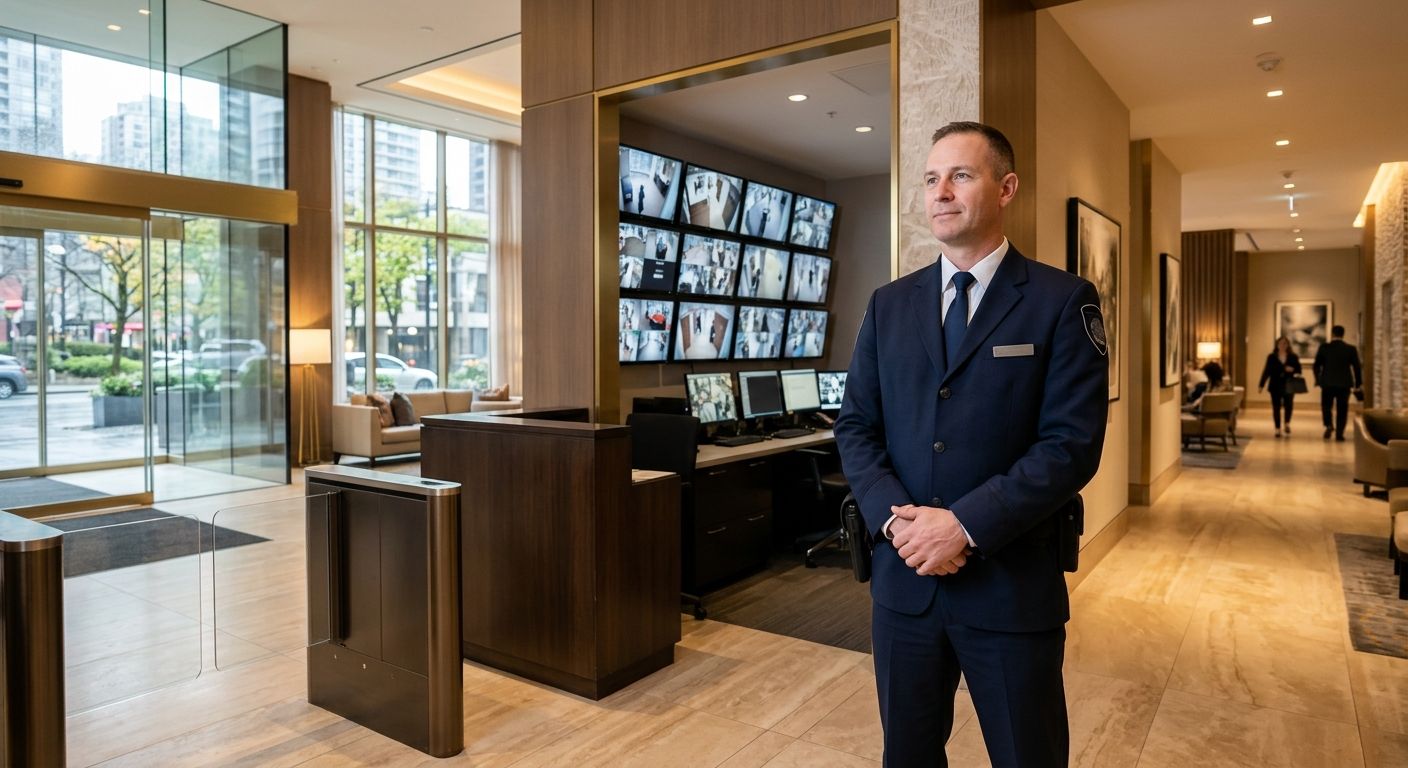
    A security risk intelligence center gives Vancouver hotels a coordinated approach to protection by integrating licensed personnel, live CCTV monitoring, and access control into a single, responsive system. It directly addresses hotel-specific risks such as guest safety, theft prevention, and constant oversight across large properties.

    Our licensed security guards and 24/7 monitoring teams are trained to recognize and mitigate hospitality-specific risks in real time. We prioritize proactive measures through site-specific audits that tailor solutions to each hotel’s layout and guest flow. With over 25 years of experience protecting Vancouver properties, we commit to reliable service and rapid incident escalation, delivering peace of mind without promising absolute risk elimination.

    Key Takeaways

    • A security risk intelligence center is the nerve center where our monitoring team collects, analyzes, and acts on real-time data from multiple sources to safeguard guests, staff, and property.
    • We’ve explained previously what a security risk intelligence center does with raw information, but there’s more to it: why hotel owners and managers should care about its intelligence.
    • Speed matters in security.
    • The security risk intelligence center is where data becomes insight.
    • Vancouver security risk assessments are structured reviews that identify a building’s vulnerabilities, threats, and existing safeguards.

    Security Risk Intelligence Center Fundamentals for Guest and Asset Protection

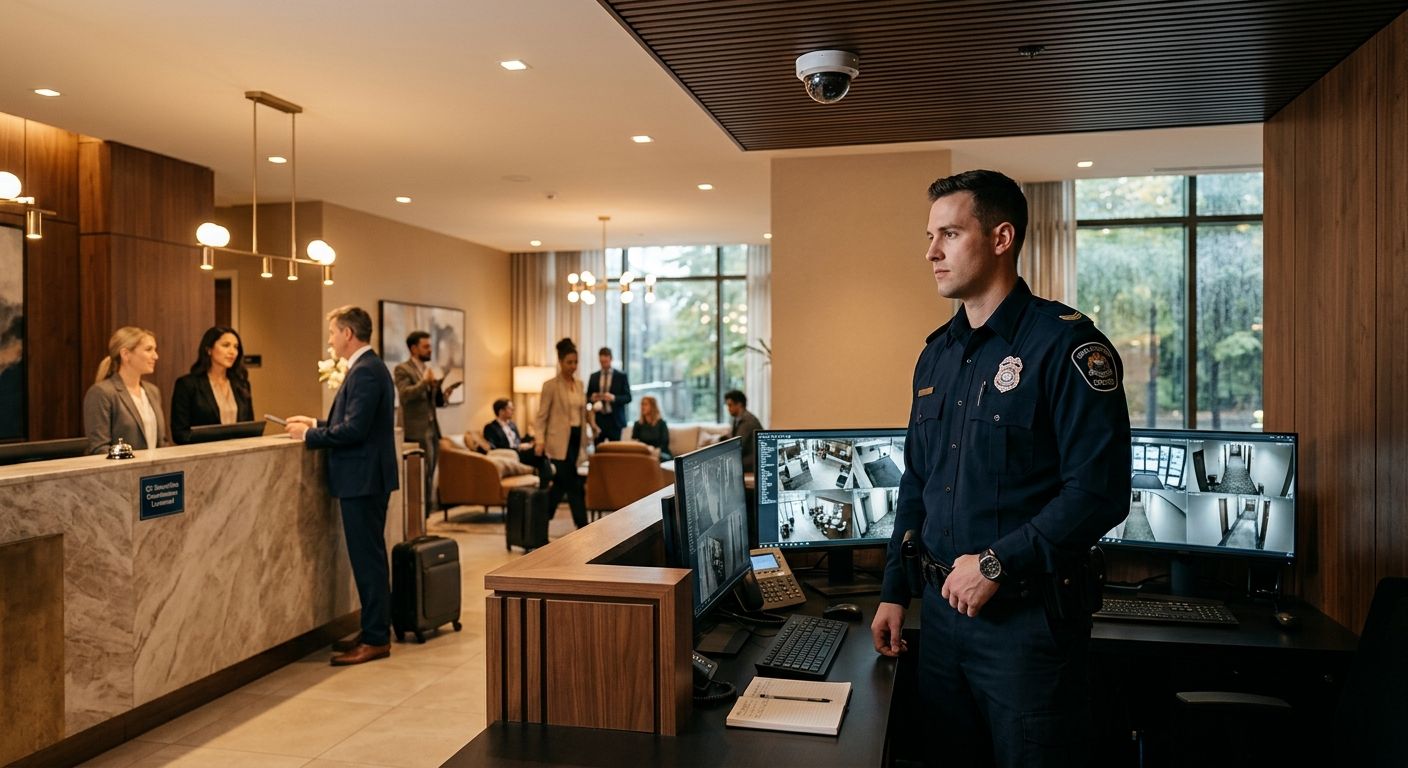
    A security risk intelligence center is the nerve center where our monitoring team collects, analyzes, and acts on real-time data from multiple sources to safeguard guests, staff, and property. In Vancouver hotels, this means integrating feeds from 24/7 CCTV cameras, access control systems, and on-site guard observations into a single operational view. The result is a proactive security posture that identifies potential threats, such as unauthorized access or disturbances, before they escalate into incidents. By transforming raw data into actionable insights, our center maintains continuous situational awareness across the Lower Mainland, ensuring quiet corridors, controlled back-of-house access, and unobtrusive yet effective coverage of lobbies and entry points.

    Our monitoring centre provides continuous coverage over all lower mainland areas, ensuring quiet corridors, controlled back-of-house access, and unobtrusive yet effective coverage of lobbies and entry points. Intelligence leads to information which then turns to action. Our licensed and insured guards can respond rapidly and appropriately to emerging risks. Be they watching traffic in a lobby area or controlling activity through the restricted service corridors we maintain full situation awareness in order to ensure both the safety of the guest and efficiency of operations. The key to this is trained professionals who bring more than 15 years of experience serving 1,000+ clients with 200+ dedicated personnel.

    Our team is comprised of industry experts trained to BC standards, bringing more than 15 years of experience serving 1,000+ clients with 200+ dedicated personnel. Team members all hold required certifications, including Basic Security Training and Advanced Security Training, ensuring compliance with provincial regulations. Site-specific plans further help us ensure that monitoring tasks match the site’s unique plan and the guest flow patterns at said locations.

    We change from reacting to incidents to embracing proactive risk intelligence, creating an environment where guests feel secure and staff can focus on hospitality. This approach doesn’t just address threats—it prevents them, delivering peace of mind through vigilance rather than waiting for problems to arise.

    Intelligence-Led Security Versus Reactive Guarding
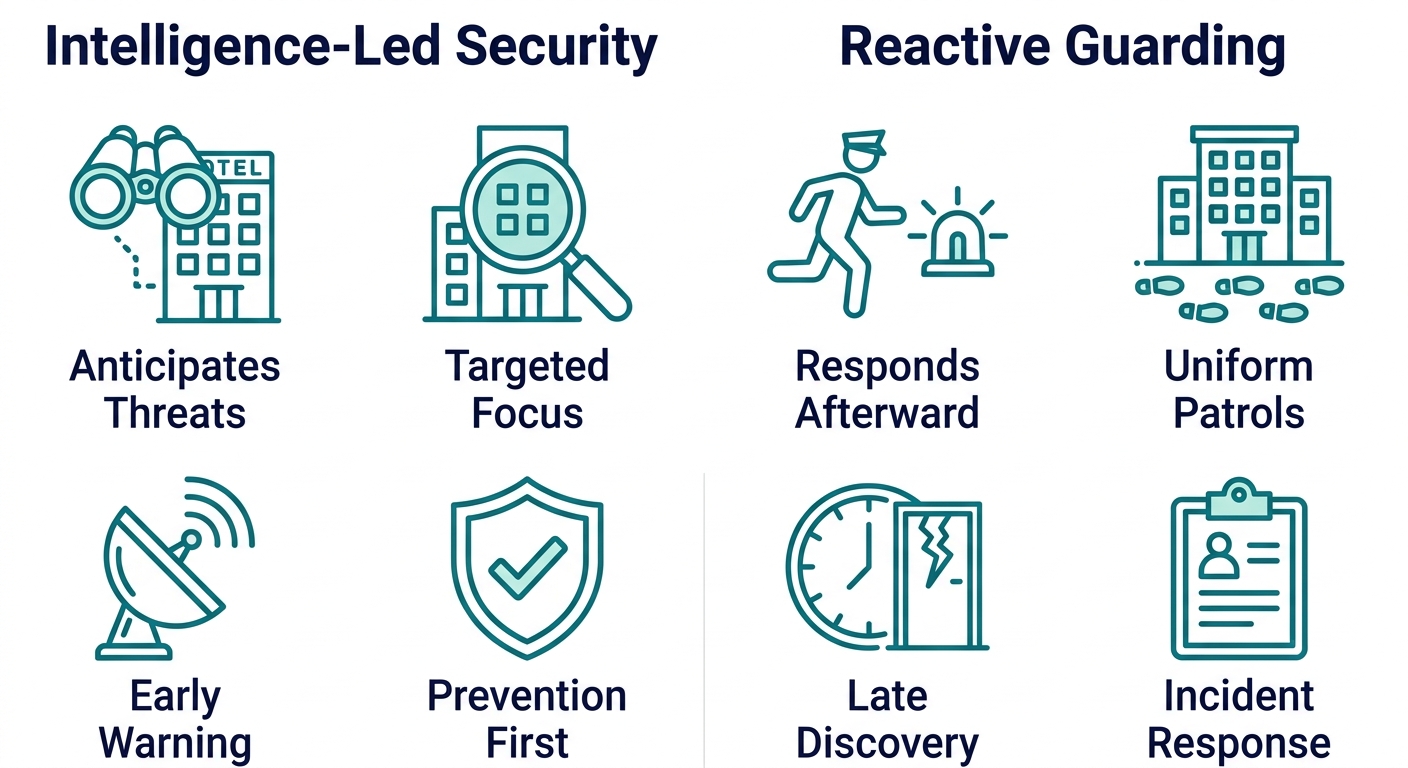
    Two-column infographic comparing Intelligence-Led Security and Reactive Guarding with teal outlined icons and navy headers on a white background, listing four features in each column.
    Intelligence-led security vs reactive guarding strategies.

    We’ve explained previously what a security risk intelligence center does with raw information, but there’s more to it: why hotel owners and managers should care about its intelligence. The purpose of an intelligence-led security system is to avoid the standard way of doing things by predicting potential threats based on real-time data and the current environment in the area, then acting on them before any incident happens. Rather than sitting back while things unfold until they reach a crisis point, we can focus all of our resources on areas where our research has determined are more likely to be the source of danger. That means taking proactive steps instead of simply responding to events as they happen.

    With reactive protection, however, the guard patrols are based upon the likelihood that something bad might happen at any time so he patrols over large expanses looking for trouble. This method ensures a visible presence, but it often discovers problems only after they’ve started, leaving gaps where risks concentrate. Guards respond to incidents as they happen, which can mean delayed intervention and uneven protection across your property.

    The two models differ across three key dimensions:

    • When action is taken: Intelligence-led security acts before incidents emerge, while reactive guarding responds during or after
    • Where attention is focused: Intelligence directs resources to high-risk zones in real time, whereas reactive guarding spreads coverage evenly
    • What the hotel gains: Earlier warnings and prevention versus incident containment and recovery

    Combined, for hotels in Vancouver and the Lower Mainland, the strongest protection comes from combining both approaches: our security risk intelligence center feeds live threat data to on-site guards and monitoring teams, ensuring they know where to prioritize their presence. Trained guards then offer this quick action and deterrence. The result: layers of protection, informed by intelligence gathered. The final protective layer includes on-site personnel that can quickly react when necessary.

    Your peace of mind begins with knowing risks are spotted early and handled efficiently. The practical payoff of this proactive approach is timely information about crime and safety threats near your property, setting the stage for the next section on how real-time alerts keep your guests and assets secure.

    Real-Time Alerts for Crime and Safety Threats Near Your Property

    Speed matters in security. The faster a threat is detected, the smaller the window for harm to guests, staff, or property. A security risk intelligence center approach turns live monitoring into actionable alerts, shifting teams from reacting after an incident to intercepting risks as they emerge.

    Our teams watch for patterns that matter: unauthorized entry attempts, loitering in restricted zones, or vandalism unfolding in real time. These aren’t isolated events; they’re signals that feed a broader intelligence loop. When a camera’s AI analytics flag a trespasser near a loading dock or a guard spots suspicious activity in a parking garage, the alert travels instantly to our 24/7 monitoring hub. From there, licensed and insured personnel assess the situation and dispatch the nearest guard, mobile patrol, or on-site team for rapid response.

    Alerts alone don’t secure a property—trained professionals do. Our guards don’t just receive notifications; they interpret context, verify threats, and act decisively. Whether it’s a disturbance in a hotel lobby or an after-hours entry attempt at a commercial building, the difference between a minor incident and a major disruption often comes down to who acts on the alert and how quickly.

    Intelligence compounds over time. Repeated trespassing near a rear entrance might prompt a patrol route adjustment or additional camera coverage. A spike in vandalism in one parking level could trigger targeted lighting upgrades or access control tweaks. By weaving real-time alerts into daily operations, we don’t just respond to threats—we shrink their window to occur in the first place, turning reactive measures into proactive protection tailored to each property’s unique risks.

    Integrating Intelligence with Concierge, Guards, Patrols, and CCTV Monitoring

    The security risk intelligence center is where data becomes insight. And this insight translates directly as real time information feeds for people who need it right now. Here in Vancouver and the Lower Mainland, our team makes sure that concierges, guards, patrollers and CCTV teams get their security risk information on a site-by-site basis instead of pre-existing assumptions. It’s all about making each layer of protection react according to what happens at the moment, not reacting to yesterday’s risks.

    On-site guards benefit from context-rich briefings that highlight emerging threats in their immediate environment. When local risk levels rise, our mobile patrols adjust routes to concentrate on high-vulnerability zones such as building entrances, loading areas, and parkade access points. This dynamic approach strengthens situational awareness and supports faster, more targeted interventions before incidents escalate. Our team’s 200+ licensed professionals use these briefings to maintain vigilance across every site we protect. With over 15 years of experience, we ensure our staff are always prepared to respond effectively.

    Our live CCTV monitoring operators use intelligence-driven focus areas to track developing situations in real time, and when an alert identifies a potential hotspot they escalate concerns to on-site teams and coordinate patrol adjustments accordingly. In this way, the operator is in control over technology that augments human judgement instead of replacing it. As a result, a sense of human awareness and responsibility is maintained. The various components of this multi-layered approach come together to provide a single overall security posture for the business that adapts as conditions change.

    An integrated operation is only as effective as the information behind it. The next step in securing your property is understanding which data sources shape a robust commercial building security assessment — ensuring your security risk intelligence center remains grounded in accurate, actionable insights.

    Security Risk Assessment in Vancouver: Data Sources That Shape Commercial Building Security

    Vancouver security risk assessments are structured reviews that identify a building’s vulnerabilities, threats, and existing safeguards. They aren’t a single product or service, but rather the basis upon which we make decisions on what to invest our time and money into next.

    • Crime and incident data provides a starting point by highlighting patterns in reported incidents, times of day, and locations on the property. We recommend property managers verify current data with local police resources to ensure accuracy and completeness. This external data helps prioritize areas that may require additional safeguards or procedural adjustments.
    • On-site audits and walkthroughs reveal what raw data cannot: lighting levels, sightlines, entry points, loading areas, and how people actually move through the building. These observations help pinpoint risks that might otherwise go unnoticed, such as blind corners or poorly lit corridors. Our team conducts these walkthroughs with trained personnel who document every detail to ensure nothing is overlooked.
    • Access control records and CCTV footage offer internal insights into system performance and gaps. They show where entry systems are bypassed, where monitoring blind spots exist, and where procedures may need adjustment. Reviewing these records regularly ensures systems remain effective and compliant with site-specific requirements.
    • Human input from tenants, front-desk staff, contractors, and guards adds qualitative context that data alone cannot capture. Their daily observations often surface subtle risks tied to behavior, routines, and site-specific conditions, making them a critical component of any assessment.

    We utilize qualified, licenced security administrators for all our inspections. All assessments conform with The BC Security Services Act, and each evaluation is tailored to the property to ensure the findings reflect its unique operations and environment. Therefore, the assessment is customized to ensure the findings will be applicable and reflective of how the property operates on a day-to-day basis.

    With this clear image of danger in mind, property owners can choose to construct or upgrade their present day security measures based on up-to-date information.

    Frequently Asked Questions

    How does a security risk intelligence center help protect hotel guests and property assets?

    A security risk intelligence center collects and analyzes real-time data from multiple sources, such as CCTV feeds, access control systems, and guard observations, to identify and mitigate risks before they escalate. It transforms raw information into actionable insights, enabling proactive responses to potential threats like unauthorized access or disturbances, ensuring continuous situational awareness across the property.

    What is the difference between reactive security guards and an intelligence-led security approach?

    Reactive security guards respond to incidents as they occur, patrolling broadly to deter threats after they emerge. An intelligence-led approach uses real-time data to predict and prevent risks, directing resources to high-risk zones before incidents happen, combining proactive monitoring with rapid on-site action for layered protection.

    Can a security risk intelligence center provide real-time alerts for local crime or safety threats near my property?

    A security risk intelligence center monitors live feeds and AI analytics to detect emerging threats such as unauthorized entry attempts or vandalism in real time. Alerts are assessed by trained personnel who dispatch guards or adjust patrols immediately, enabling faster intervention and reducing the window for harm to guests, staff, or property.

    How do security risk intelligence services integrate with on-site concierge and patrol staff?

    Security risk intelligence services provide context-rich briefings and real-time updates to concierge and patrol staff, highlighting emerging threats in their immediate environment. This ensures guards and patrols adjust their presence dynamically, focusing on high-vulnerability zones like entrances or loading areas to strengthen situational awareness and enable faster, targeted responses.

    What data sources are used to assess the security risk environment surrounding a commercial building?

    Security risk assessments use crime and incident data, on-site audits, access control records, CCTV footage, and human input from tenants and staff. These sources identify vulnerabilities, lighting issues, blind spots, and behavioral risks, ensuring the assessment reflects the property’s unique operations and environment.

    Building an Intelligence-Led Security Program for Your Property

    This information only creates real value when it feeds into a continuous cycle of assessment and action. That cycle starts with gathering relevant information, then evaluating risks to determine the right mix of measures—whether that’s concierge presence, CCTV monitoring, access control, or patrols. The cycle doesn’t end there; regular reassessment ensures your program adapts to new threats and evolving conditions in Vancouver.

    This is another way for us to be in control over how we manage our exposure and to conduct reviews at different intervals without compromising on compliance when it comes to implementing surveillance and monitoring measures in accordance with BC’s privacy laws (PIPA). We work with local property managers and operators from the Lower Mainland who want to transform their intelligence into concrete security solutions.

    To arrange a security risk intelligence center based on your specific site conditions, please contact us to conduct a site survey and acquire a customized quotation. Results and pricing vary by property, and response times depend on circumstances, consult a licensed security professional for site-specific advice.

    Protect Your Vancouver Property Today

    You now understand how an intelligence-led approach can transform hotel protection in Vancouver, from real-time alerts to coordinated guards, patrols, and CCTV monitoring. Turning that understanding into an effective program starts with a site-specific security risk assessment of your property. Our team at Regent Security Services Ltd. brings over 15 years of experience and more than 1,000 clients served across Vancouver and the Lower Mainland. Our licensed, insured guards and 24/7 monitoring are committed to supporting your peace of mind around the clock. Every property is different, so we recommend a custom quote based on an on-site assessment rather than a one-size-fits-all package. Speak with our hotel security specialists to discuss your building’s unique risks and priorities. Call us at (+1) 866-603-1303 to get started today.
    Protect Your Vancouver Property Today

  • Concierge vs Security Guard Differences: A Complete Guide

    Concierge vs Security Guard Differences: A Complete Guide

    Table of Contents

    Understanding Concierge and Security Guard Roles

    The concierge vs security guard differences depend primarily on a property’s design and risk profile: high-rise residential buildings typically benefit from concierge services that balance hospitality with access control, while townhouse and mid-rise developments often need dedicated security guards for active perimeter monitoring and alarm response. We recommend property managers start with a formal security audit to pinpoint their building’s specific vulnerabilities and determine the most effective staffing model. Adopting this assessment framework allows property managers to objectively determine whether their building’s layout and resident expectations are better served by a hospitality-driven concierge or a security-focused guard. Understanding these fundamental differences is the first step; the following comparison explores the key contrasts between concierge and security guard responsibilities.

    Key Takeaways

    • Concierge services and security guards each focus on a particular area.
    • One major difference is the formal training and licensing of security guards, compared to concierges.
    • In British Columbia, concierges provide critical front-desk services, but are legally prohibited from performing security functions without a valid security license.
    • Balancing front desk duties between hospitality and security relies heavily on your building’s layout and the types of risks you face.
    • Modern hotel lobbies in Vancouver handle constant foot traffic that demands both welcoming hospitality and vigilant security.

    1. Concierge vs. Security Guard: Key Differences

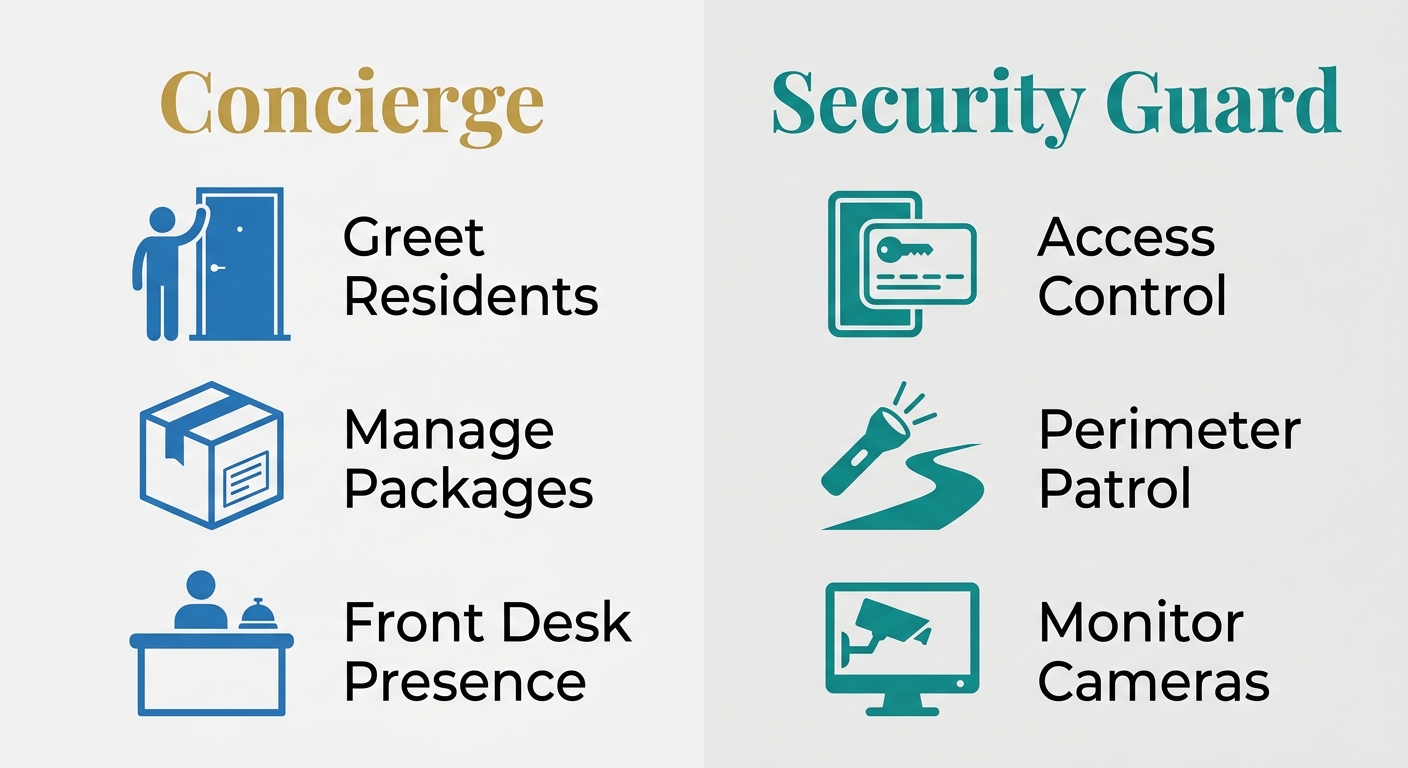
    Concierge services and security guards each focus on a particular area. Concierge services typically manage packages and greet residents. On the other hand, security guards manage the safety and patrol the perimeter of a location. In a high-rise residential tower in a downtown area, a concierge service to manage the front desk would likely be of best value. On the other hand, townhouse complexes and mid-rise residential towers require uniformed guards who can monitor fences, gates, and entry points.

    Side-by-side comparison infographic of Concierge and Security Guard roles, each with three labeled features: Concierge with Greet Residents, Manage Packages, Front Desk Presence; Security Guard with Access Control, Perimeter Patrol, Monitor Cameras.
    Infographic comparing Concierge and Security Guard responsibilities.

    At Regent Security Services, we recommend beginning with a formal security audit to identify a site’s unique exposures, enabling us to address those exposures specifically with a guard mix, rather than taking a one-size-fits-all approach. We pride ourselves on being able to take a concierge staffing and a security staffing approach to serve our clients. This naturally leads to training and licensing standards for staffing and security guard services.

    2. Training and Licensing that Set Them Apart

    One major difference is the formal training and licensing of security guards, compared to concierges. In British Columbia, the Security Services Act requires all security guards to have a license and, to earn the license, guards must have completed a basic training course (BST) and, for many assignments, advanced training (AST), in addition to Occupational First Aid Level 2 (OFA 2). All Regent Security staff are licensed and insured guards who have completed this rigorous training, ensuring full compliance with provincial standards.

    This structured preparation equips our team to manage emergencies, conduct surveillance, and protect property at a level that concierge staff, who lack equivalent credentials, cannot match. Your peace of mind comes from knowing that trained professionals are handling your site’s safety rather than relying on unlicensed personnel whose qualifications stop at guest services. Because security guards hold these legislated certifications, they are legally and practically qualified to perform protective duties that a concierge is not authorized or trained to carry out.

    3. Can a Concierge Perform Security Duties?

    In British Columbia, concierges provide critical front-desk services, but are legally prohibited from performing security functions without a valid security license. Without a security license, concierges cannot detain individuals or use force to respond to incidents—a function reserved for licensed security personnel.

    According to a legal guide from LawyerInfo.ca, tenants’ right to peaceful enjoyment under the Residential Tenancy Act prohibits concierges from opening mail or interfering with parcel deliveries without explicit authority. Under the Personal Information Protection Act, concierges cannot log daily tenant movements or conduct persistent surveillance unless a specific security threat requires it. These restrictions apply to protect the privacy of residents and help define the extent of the concierge’s functions.

    Knowledge of these legal boundaries helps property managers decide whether to hire a concierge, a licensed security guard, or a combination of both. With our unrivalled security industry experience and expertise, our team supports clients in staffing properties with the right personnel while respecting all applicable laws.

    4. Hiring a Concierge or a Security Guard for Your Front Desk

    Balancing front desk duties between hospitality and security relies heavily on your building’s layout and the types of risks you face. In the case of many high rise residential towers in downtown Vancouver, the concierge model provides the right balance. Resident service and package control, coupled with lobby presence provide the guest service amenity that many residents’ expectations have come to include. Elsewhere in the Lower Mainland, townhouse complexes and low-rise developments are better served by licensed security guards who focus on perimeter monitoring, alarm response, and active patrols.

    We suggest having a formal security audit completed prior to making any new hires. The right professionals can identify your greatest risks and security exposures based on site inspections and assessments. An audit would consider entry and exit points, resident volume, and surveillance to determine the right front desk solution or patrol configuration to provide the greatest deterrent. No one-size-fits-all model works. The right configuration for front-desk service relies on the nature of the property and the clear definition of security and service needs.

    5. Effectiveness in High-Traffic Hotel Lobbies

    Modern hotel lobbies in Vancouver handle constant foot traffic that demands both welcoming hospitality and vigilant security. When weighing concierge vs security guard differences for a high-traffic hotel lobby, we look at how each role meets the unique pressures of a 24-hour guest environment.

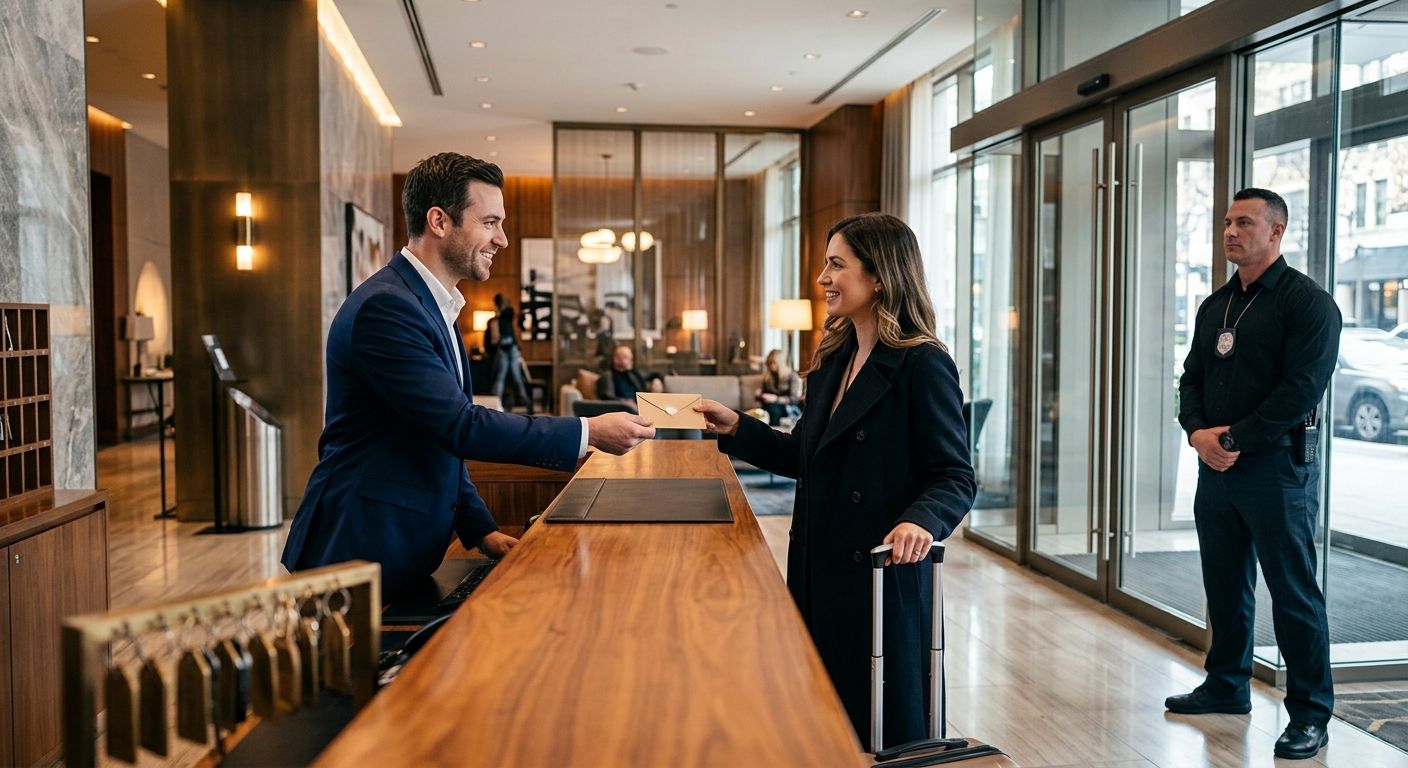
    A concierge focuses primarily on guest experience and front-of-house management. They greet arrivals, handle luggage, provide local recommendations, and create a polished first impression. A security guard, by contrast, oversees access verification, monitors entry points, and conducts surveillance to prevent unauthorized access. Our industry guidance emphasizes that the best choice depends on a property’s architecture, location, and specific risk profile.

    The effectiveness of either role hinges on a site-specific security audit. Where your safety is our story, we help hotels assess their lobby traffic patterns and security goals before recommending a staffing model. Understanding how each function performs under lobby conditions clarifies the combined responsibilities a concierge security officer would handle.

    6. The Concierge Security Officer Job Description

    Staffing high-traffic hotel lobbies to provide security and guest service requires a unique blend of skills. We look for this balance in concierge security officer candidates in Vancouver.

    Key responsibilities and qualifications for the role include:

    • Welcoming guests, answering inquiries, and providing directions while maintaining a visible deterrent to unauthorized behaviour.
    • Monitoring live CCTV feeds across the property to promptly detect and respond to suspicious activity.
    • Managing keycard access systems and entry points, ensuring only authorized individuals gain entry.
    • Holding full licensure under the BC Security Services Act, including Basic Security Training (BST) and Advanced Security Training (AST) certifications.
    • Drawing on our 15+ years of industry experience and a team of over 200 trained professionals to deliver consistent, reliable service.

    Because this position demands a presence that integrates both security and guest services, we assign concierge security officers to hotels throughout the Lower Mainland and Vancouver.

    7. How Regent Security Integrates Both Roles

    Regent Security’s integrated security and concierge services provide property-specific solutions based on layout and risk factors.

    For one high rise in Vancouver, we lean toward a concierge-heavy deployment. Recommended in our guidance for strata property managers, concierge services control access, greet visitors and manage deliveries. Our solution prioritizes residents’ convenience while effectively managing controlled access.

    An example in the Lower Mainland would be a townhouse complex, where our solution includes more security guard services. Guards on patrol monitor all access points and provide a visible deterrent. Our solution takes an open-air and suburban layout into consideration by providing pro-active security services.

    A formal security audit ultimately drives our integrated solution. The audit identifies the overall risk exposure of the property, and based on the findings, appropriately integrates concierge, security services, or a combination of the two. Our solution ensures that the strategies property managers utilize are not one-size-fits-all. By understanding our integration, property managers can implement best practices that strengthen both safety and day-to-day resident experience.

    8. Best Practices for Property Managers

    Integrated solutions like Regent Security’s dual-role model exist, but property managers need a clear framework for choosing between a concierge and a security guard for their property.

    • Conduct a formal security audit. Our team recommends mapping your property’s risks, incident history, and resident expectations before deciding on a staffing model. This process helps determine whether front-desk concierge hospitality or patrol-based guard coverage fits your layout.
    • Match the service to your building type. For high-rise towers, a concierge provides guest welcoming, package handling, and access control. Townhouse and mid-rise complexes are better served by mobile security guards who focus on perimeter monitoring and alarm response.
    • Uphold tenant privacy rights. British Columbia’s Residential Tenancy Act and privacy laws prohibit security staff from opening private mail, arbitrarily logging daily movements, or detaining guests. As LawyerInfo.ca highlights, property managers are legally responsible for ensuring staff compliance.

    With these best practices in hand, you’ll be prepared to make the choice that protects your property and respects your residents.

    Frequently Asked Questions

    What are the main functional differences between a hotel concierge and a security guard?

    A hotel concierge focuses on guest services such as greeting, luggage handling and local recommendations, while a security guard concentrates on access control, surveillance and perimeter patrols. Concierges manage packages and create a polished first impression; guards monitor entry points and prevent unauthorized access.

    Should my property hire a concierge or a security guard for the front desk?

    The choice depends on your property type: high-rise residential towers typically benefit from a concierge for hospitality and package management, while townhouse complexes need a licensed security guard for perimeter monitoring and alarm response. A formal security audit is recommended to identify the right fit.

    Can a concierge perform the same security duties as a licensed security guard?

    No, a concierge cannot perform security duties without a valid security license. Under BC law, unlicensed concierges are prohibited from detaining individuals, using force, conducting surveillance, logging tenant movements or opening private mail. Only licensed guards may carry out protective functions.

    Is it more effective to have a dedicated security guard or a concierge in a high-traffic hotel lobby?

    Effectiveness depends on a property-specific security audit that assesses architecture, location and risk. A concierge delivers guest hospitality, while a security guard ensures access control and surveillance; the best model balances both based on the lobby’s unique traffic patterns and security needs.

    How do the training requirements differ for concierge staff compared to on-site security guards?

    Security guards must be licensed under BC’s Security Services Act, requiring Basic Security Training (BST), often Advanced Security Training (AST) and Occupational First Aid Level 2 (OFA 2). Concierge staff have no such mandated training; their qualifications focus on guest services without the legislated protective skills.

    Making the Right Choice for Your Property

    Selecting the right service model depends on your property’s architecture and risk profile. High-rise strata buildings in Vancouver benefit from concierge services that combine hospitality, package management, and controlled access, while townhouse complexes need security guards for perimeter monitoring and access control. Understanding the concierge vs security guard differences helps property managers align service selection with their building’s needs. A formal security audit identifies the most effective risk mitigation strategy. We respect tenants’ rights to quiet enjoyment, mail privacy, and PIPA-compliant CCTV use. To determine the fit, contact us for a site assessment and custom quote. Services are subject to site assessment and custom quotation; response times and results may vary. This article is for general guidance and does not constitute legal advice.

    Find Your Perfect Security Solution

    Now that you understand the key differences between concierges and security guards, you are well-prepared to make the right choice for your property. Our guide highlighted how high-rise buildings benefit from concierge hospitality, while townhouse complexes require security-focused perimeter patrols. A formal security audit, as recommended throughout the comparison, is the critical next step to identify your building’s unique risks. Moving from insight to action is where real protection begins. We blend both roles seamlessly, drawing on over 15 years of experience serving properties across the Lower Mainland. Schedule your personalized site assessment today and take the first step toward a safer, well-managed property.

    Find Your Perfect Security Solution

    Resources

  • Hotel Loss Prevention Strategies: A Complete Guide for 2026

    Hotel Loss Prevention Strategies: A Complete Guide for 2026

    Table of Contents

    Hotel Loss Prevention Strategies in British Columbia

    Developing effective hotel loss prevention strategies in British Columbia requires a multi-layered approach that proactively addresses theft, vandalism, and liability risks. The British Columbia Security Services Act mandates that all security providers and guards be properly licensed and trained, creating a regulated environment where professional expertise is essential. One-size-fits-all packages fall short; instead, our process begins with a comprehensive audit that evaluates site-specific risks, from perimeter vulnerabilities to internal operational gaps. The most visible and foundational element of our strategy is deploying professional on-site security guards who serve as a deterrent and first line of response. Our team of over 200 licensed, insured professionals brings decades of experience to hotels across the Lower Mainland, delivering customized loss prevention programs that align with BC regulations.

    1. Visible On-Site Security Guards

    In loss prevention strategies for hotels, having uniformed security guards on the premises is a key element. A uniformed, professional guard appearance reinforces authority and acts as a strong visual deterrent to theft and loitering. The British Columbia Security Services Act requires security guards to have a valid license and complete mandatory training. Our team of over 200 licensed professionals meets these requirements and receives training and professional development to manage security incidents.

    Security guards typically monitor hotel entrances and exits, conduct regular patrols of lobbies, corridors, and parking areas, and manage access control. Guards are trained to detect suspicious behavior, defuse tense situations, and serve as a first point of contact for guests with safety concerns.

    We provide 24/7 security guard coverage to ensure a human response is available to de-escalate incidents or address emergencies. While on-site security guards deliver essential human oversight, pairing them with electronic surveillance systems creates a comprehensive security layer that strengthens a hotel’s overall security posture.

    2. AI-Powered Live Video Monitoring

    Live video monitoring technology fills coverage gaps in Vancouver hotel corridors where uniformed guards provide human presence, using AI-powered intelligent surveillance.

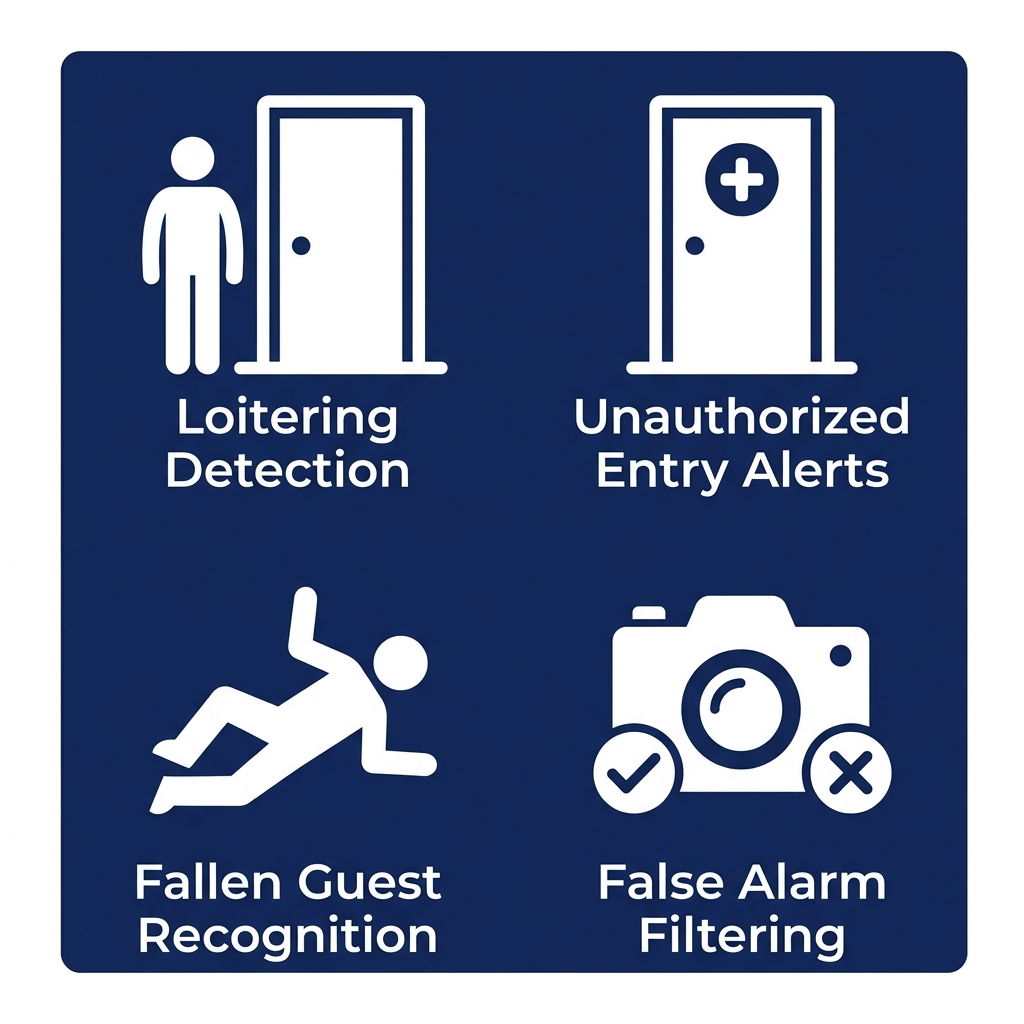
    The technology features analytics that help distinguish real threats from insignificant motion. Threats can include a person loitering by a guest door, or a person attempting to enter a restricted mechanical room or office. It also differentiates those threats from innocuous motion such as shadows or passing vehicles. It also detects anomalies like a fallen guest in a corridor, triggering immediate assistance.

    Grid of four white icons on navy background showing loitering detection, unauthorized entry, fallen guest recognition, and false alarm filtering.
    AI-powered threat detection icons for proactive security monitoring

    While our AI is designed to work over existing closed-circuit television (CCTV) systems, hotels do not need to totally overhaul their existing systems. In compliance with BC’s PIPA, we restrict surveillance to common areas and never guest rooms. Our hybrid model ensures AI is monitoring 24/7, and licensed guards validate alerts and deploy rapid response when needed.

    Verified data is utilized to perform comprehensive and ongoing security audits. Audits help us improve our protective services and ensure the peace of mind of our valued customers.

    3. Comprehensive Security Audits

    Video monitoring offers an immediate threat detection solution. However, a more comprehensive evaluation of an organization’s overall security posture is required on a recurring basis. Our security experts evaluate the physical and operational gaps that exist within an organization, as aligned with the ASIS International practice standards and guidelines.

    We follow a four-step audit framework—inspection, assessment, recommendation, and implementation—that incorporates thorough onsite walkthroughs, staff interviews, incident log reviews, and risk scoring. Throughout the evaluation, we remain compliant with British Columbia’s Security Services Act and the Personal Information Protection Act (PIPA), ensuring all licensing requirements and privacy standards for CCTV and visitor data are met without offering legal advice.

    We recommend annual audits or re-assessments whenever threat levels or operations change significantly. Access control systems, including keyless entry and biometrics, IP camera placement with PTZ, perimeter security, and emergency response protocols are assessed. Findings, including those pertaining to access control and entry point security, directly inform the implementation of strict visitor management protocols.

    4. Strict Visitor Management Protocols

    Results from security audits indicate areas of weakness that strict visitor management protocols can remedy. Hotels and commercial properties in the Vancouver region, and throughout the Lower Mainland, can benefit from implementing a layered approach to security, consisting of concierge-led check-in paired with technology. These approaches strengthen hotel security plans. Our protocols ensure that every visitor is screened without compromising the guest arrival experience.

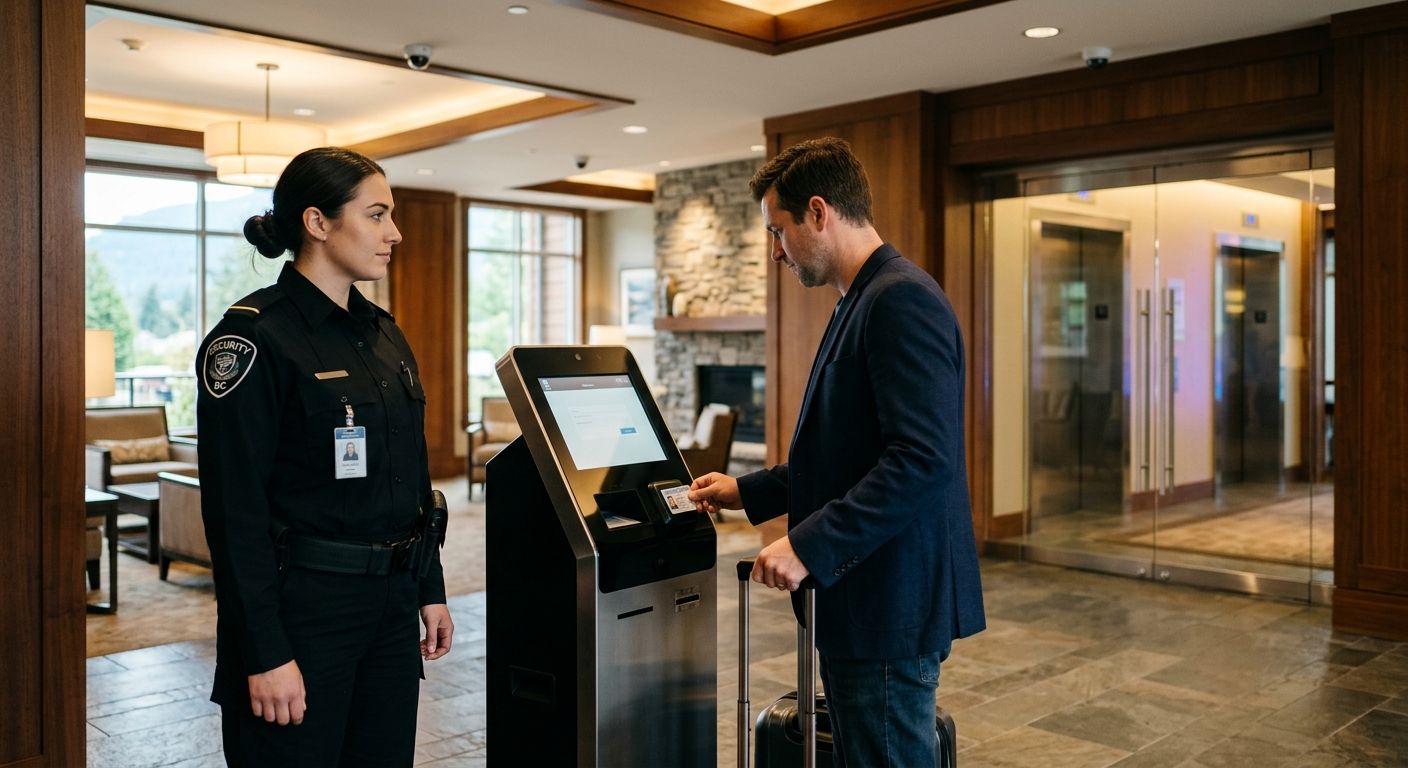
    Concierge-led check-in acts as a visible security checkpoint. Digital kiosks and self-registration portals provide visitor management systems that validate visitor information, improve throughput and accuracy of visitor logs, and provide records and logs readily available. Maintaining accurate visitor logs and verified visitor information helps reduce unauthorized access. These systems, in conjunction with NFPA codes, allow real time visitor tracking and compliance with emergency lockdowns. The levels of automation and human oversight are adjusted to the foot traffic and risk profile of the property.

    These layered visitor controls are complemented by randomized mobile patrols that further deter and detect unauthorized activity.

    5. Randomized Mobile Patrols

    We have strict visitor policies at the front entrance, and equally important patrols throughout the property. To stay one step ahead of criminals, we use mobile patrols with randomized schedules and routes, making guard presence unpredictable. This irregularity prevents criminals from exploiting predictable security gaps.

    Our patrol units use GPS to time and log their locations, giving hotel management proof of patrols and accountability. Our mobile patrols complement static guards by covering parking lots, perimeter fences, and secondary building entrances when the checkpoint officer is occupied. One mobile unit can efficiently monitor multiple zones, reducing the need for numerous fixed posts while maintaining comprehensive coverage.

    Patrols help document risks by reporting deficiencies like insufficient lighting and unsecured access points. These reports support our clients’ risk management and insurance requirements by demonstrating due diligence and helping them identify and address security weaknesses proactively.

    When paired with sophisticated electronic access control systems, random mobile patrols create a multi-layered security environment that deters theft and vandalism without relying on predictable routines.

    6. Advanced Access Control Systems

    While randomized patrols provide dynamic deterrence, advanced access control systems provide a fixed perimeter of security which denies unauthorized entry. At Regent Security, we provide advanced access control systems for hotels in Vancouver and throughout British Columbia. With our systems, only guests and authorized personnel have access to the restricted areas of the hotel.

    Advances in technology have resulted in modern solutions that prioritise keyless entry by means of mobile credentials, cards or biometric verification such as fingerprint or facial recognition. With these systems, hotels can program access down to individual zones—guest floors, back offices, and storage rooms—while automatically generating detailed audit trails for every entry attempt.

    Combining these systems with CCTV and alarm response provides a secure and responsive mesh. When the system detects an unauthorized access attempt, it can trigger a real-time alert and pull up the relevant camera feed. Our systems and solutions are site specific and tailored to the unique layout and risk profile of a property. We provide a range of security systems and solutions which complement the existing layers of security for a property.

    Ultimately the technology is only as good as the people who manage it. This makes well-trained staff essential for incident response.

    7. Staff Training and Crisis Drills

    Advanced access control systems can protect only to the extent that front-line staff has been adequately trained to understand their operation and respond to alarms and other incidents. As indicated in Regent Security’s hotel security protocols, the British Columbia Security Services Act mandates that security guards employed at hotels complete both basic and advanced training, in addition to holding a valid security guard’s license. Therefore, it is imperative for hotels to verify that the above compliance requirements are satisfied prior to employing any security staff.

    Detailed crisis management plans must be documented, prepared for site-specific incidents, and reviewed after every drill or real incident. It is important to conduct post-drill debriefs to capture lessons learned and update plans to immediately adjust procedures. We recommend running realistic, site-tailored exercises at least quarterly, covering fire, medical, active threat, and guest disturbance scenarios. Each drill should test techniques to de-escalate and resolve conflicts, and verify the proper use of the property’s CCTV and access control systems.

    We offer hotel-specific, site-tailored training programs, supported by over 200 licensed and insured professionals, that ensure every hotel can mount a rapid, coordinated response that protects people and property.

    8. Elevating Guest Satisfaction with Visible Security

    Staff who are well-trained form the core of any effective security program, but their impact is amplified when supported by visible security infrastructure that guests can see and trust.

    We create "active security" through the use of AI-based behavioral analytics to detect and classify various threats in our video surveillance system. Our behavioral analytics are used to identify anomalies and distinguish threats from non-threatening motion such as shadows or wildlife. This allows our system to understand and detect threats like loitering near guest doors or unauthorized access to restricted areas, reducing false alarms. As part of a comprehensive security program, proactive detection directly supports loss prevention and gives guests a better sense of security without the need for intrusive surveillance.

    Licensed security guards, trained under British Columbia’s Security Services Act, create a strong visual deterrent in parking areas and hotel entrances/exits. A visible security presence, integrated with access control and other security infrastructures, builds confidence in guests that their room has been secured. As a result, a security program can become a "guest experience differentiator" in the hospitality industry.

    Through such program synergies, both guest experience and security are strengthened.

    Building a Comprehensive Hotel Security Program

    Visible security measures boost guest satisfaction but are a layer of a security program. A robust program underpins loss prevention strategies and combines compliance with the BC Security Services Act—licensed guards, mandatory training—with layered technology: IP PTZ cameras in high-risk areas and keyless access (mobile credentials, biometrics). With over 200 licensed, insured professionals with 24/7 coverage, we help hotels build programs integrating people, process, and technology. Contact us for a site-specific quote; services are subject to site assessment, custom quotation; results and pricing may vary. Response times and alarm outcomes may vary; CCTV must comply with applicable privacy laws in British Columbia. Please consult a licensed security professional for site-specific advice; this is general guidance, not a substitute for professional or legal advice.

    Request Your Custom Security Proposal

    From visible on-site guards to AI-powered live monitoring, these strategies are designed to protect your hotel, guests, and reputation. We deliver all these layers with over 200 trained, licensed, and insured professionals providing 24/7 coverage across British Columbia. With more than 15 years of experience serving Vancouver and the Lower Mainland, we understand the local regulations that matter—including the BC Security Services Act and PIPA privacy requirements. Our team will assess your property’s unique vulnerabilities and build a comprehensive, site-specific security program that integrates access control, randomized patrols, and staff training. A tailored solution not only deters theft and vandalism but visibly boosts guest satisfaction. Take the next step toward a more secure hotel by requesting a custom quote based on your specific needs. Your property’s safety and your guests’ peace of mind deserve a trusted partner.

    Request Your Custom Security Proposal

  • Hotel Emergency Response Plan: Complete Guide for 2026

    Hotel Emergency Response Plan: Complete Guide for 2026

    Table of Contents

    The Foundation of Hotel Emergency Preparedness in British Columbia

    A robust hotel emergency response plan is the cornerstone of safety and compliance in British Columbia. For hotels across Vancouver and the Lower Mainland, regulatory codes such as the BC Fire Code and WorkSafeBC requirements set the minimum baseline for emergency planning. These regulations demand more than just a document; they require a living framework that protects guests, staff, and assets. With over 25 years of experience, we know that a written emergency plan must address risk assessment, evacuation procedures, communication protocols, and regular staff training to meet provincial expectations.

    While provincial regulations provide a floor, industry standards elevate preparedness. Hotels in BC should base their emergency plans on recognized security industry standards and guidelines to ensure comprehensive coverage. ASIS International’s ORM.1 risk management framework, for example, helps properties identify vulnerabilities and implement layered security measures. Understanding the national context of hotel security protocols Canada also informs local BC requirements. Moreover, hotel access control systems play a vital role in locking down areas during an emergency, while professional licensed security guards deliver coordinated emergency responses 24/7 to maintain safety. By investing in accredited training and third-party standards, hotels ensure that their security personnel are prepared to manage any crisis. Regular plan reviews and security audits, conducted at least annually, help hotels adapt to evolving threats.

    With these foundations in place, hotels can now turn to the specific components that make up an effective emergency plan.

    Information is for general guidance and not a substitute for professional or legal advice.

    Key Components of a Compliant Hotel Emergency Response Plan in British Columbia

    Canadian and British Columbia Regulatory Requirements

    A comprehensive hotel emergency response plan must align with broader hotel security protocols in Canada, particularly to meet the BC Fire Code and the Safety Standards Act. These regulations mandate a written emergency plan that details evacuation routes, staff roles, and communication with local emergency services. In our experience, many hotel properties also reference ASIS International guidelines, which emphasize site-specific risk assessments and layered defenses, as a benchmark. The BC Security Services Act further requires that security personnel working in hotels hold valid provincial licenses, including Basic Security Training and first aid certification. Operating without licensed staff can expose a hotel to administrative penalties of up to $25,000 under the Act and may invalidate insurance coverage. Additionally, the Safety Standards Act obligates hotels to review and update their emergency procedures annually. Our team at Regent Security helps hotel operators in the Lower Mainland meet these standards through site-specific audits, staff training, and provision of licensed security personnel. By integrating these regulatory requirements into a cohesive emergency response plan, hotel operators in British Columbia can meet legal duties and protect guests and assets.

    Essential Components of a Hotel Emergency Response Plan

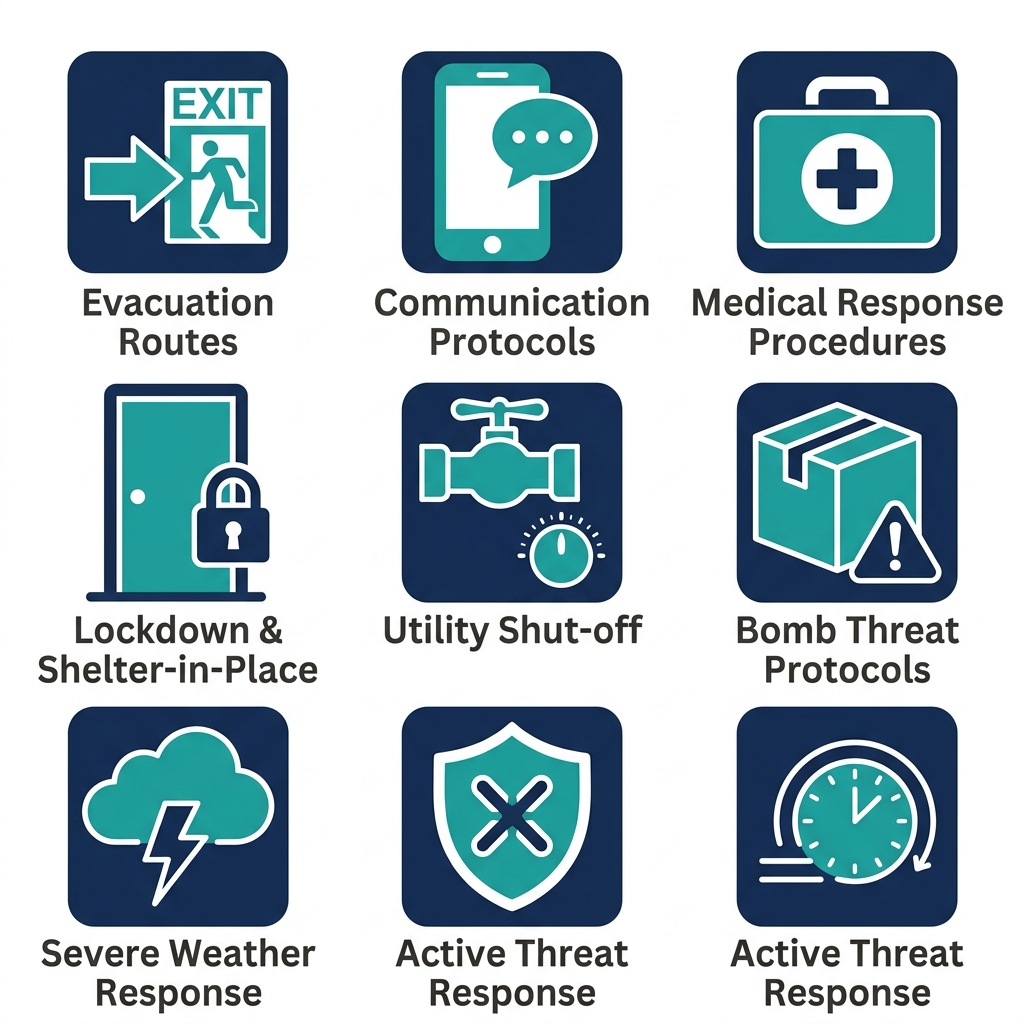
    A comprehensive hotel emergency response plan must also include a suite of operational measures that address everything from evacuation to post-incident accountability. To ensure full readiness, the plan should cover the following nine core areas:

    1. Evacuation routes and assembly points clearly marked and communicated to guests.
    2. Communication protocols for contacting staff, emergency services, and guests.
    3. Medical response procedures, including first aid stations and automated external defibrillators (AEDs).
    4. Lockdown and shelter-in-place directives, often supported by hotel access control systems to secure entry and elevator access.
    5. Utility shut-off and gas leak procedures for water, electricity, and natural gas.
    6. Bomb threat and suspicious package protocols, including search and reporting procedures.
    7. Severe weather and earthquake response measures, critical in BC’s seismically active region.
    8. Active threat response procedures (e.g., active shooter) tailored to the property’s layout.
    9. Post-incident coordination with first responders and documentation of actions taken.

    These nine elements form the backbone of a BC-compliant emergency strategy. We recommend integrating them into a single, accessible document that staff across all shifts can reference during any crisis.

    Flat icons in teal and navy on a white background, arranged in a 3x3 grid with generous spacing. Each icon labeled underneath in dark gray sans-serif. Professional, clean, and minimal design.

    Nine essential components for BC hotel emergency response plans

    Privacy Law Considerations for Hotel Surveillance and Visitor Management

    While assembling these operational components, hotels must also consider how privacy laws shape the use of surveillance and guest information. In British Columbia, the Personal Information Protection Act (PIPA) sets strict rules for how CCTV footage and access logs must be handled. Hotels must limit camera collection to what is necessary for security, post clear signage, and restrict recording access to authorized individuals. Visitor management systems that log guest names and government ID information fall under PIPA’s definition of personal data. During emergencies, hotel staff cannot indiscriminately share registration records or access logs with authorities unless a warrant or imminent threat exception applies. A hotel emergency response plan that respects these privacy boundaries demonstrates a commitment to guest trust and regulatory compliance. Our security audits include PIPA compliance checks to help hotels align their emergency plans with provincial privacy law; however, services are subject to site assessment and custom quotation, and results and pricing may vary. Additionally, PIPA mandates that surveillance footage be stored securely and not retained longer than necessary, requiring careful review of retention schedules and off-site backup procedures in BC’s Lower Mainland. This information is for general guidance and not a substitute for professional or legal advice.

    With these components in place, the next step is to ensure staff are trained and the plan is regularly tested.

    Protecting Guests, Property, and Reputation with a Structured Emergency Plan

    A structured emergency plan is the cornerstone of responsible hotel management in British Columbia. We help hotels develop a comprehensive hotel emergency response plan that integrates proactive security measures with clear response protocols, ensuring the safety of everyone on property while safeguarding the hotel’s reputation and assets.

    Hotels in British Columbia must meet specific regulatory obligations, including the BC Fire Code and provincial security licensing requirements. A documented and regularly practiced emergency plan demonstrates due diligence and can significantly reduce liability when incidents occur. Our approach draws on Professional licensed security guards who are fully licensed and trained to support fire watch duties, evacuations, and other urgent needs 24/7.

    Understanding hotel security protocols in Canada is essential for compliance. By aligning with BC regulations and guidelines from organizations like ASIS International, a hotel not only meets legal obligations but also protects its reputation. Key practices include:

    • Conducting regular emergency drills and updating the plan as needed.
    • Ensuring on-site or on-call licensed security personnel are available for fire system failures.
    • Documenting all training and incident response activities to demonstrate compliance.

    This proactive compliance framework helps hotels in British Columbia maintain guest trust and operational continuity.

    The Night Manager’s Role and Coordination with Local First Responders

    During off-hours, the night manager typically assumes the role of incident commander. We emphasize that a well-prepared night manager should be trained to coordinate directly with local first responders—police, fire, and ambulance—and activate the hotel’s emergency team. This includes directing guest evacuation, communicating with the front desk to track room status, and liaising with security personnel on the ground.

    A hotel emergency response plan must clearly define this chain of command. Our experience shows that when night managers are empowered with decision-making authority and reliable communication tools, response times improve, confusion decreases, and guest safety is prioritized. By fulfilling this role, the night manager becomes the critical link between on-site staff and external emergency services, which ultimately protects property and upholds the hotel’s reputation.

    Medical Emergency Response and Guest Communication Protocols

    Medical incidents can occur at any time, and a swift, organized response is crucial. Our recommended medical emergency protocol for hotels includes:

    1. Recognize symptoms and assess the guest’s condition without delay.
    2. Call 911 and provide precise location details within the hotel.
    3. Deploy an AED if available and trained staff are on hand.
    4. Document the incident thoroughly according to hotel policy.

    Equally important is guest communication. We advise notifying affected guests discreetly and providing timely updates to prevent misinformation and reduce anxiety. Transparent communication not only supports those directly involved but also safeguards the hotel’s reputation by demonstrating a commitment to guest welfare.

    How Access Control Systems Support Emergency Response

    Modern hotel access control systems play a proactive role in emergency preparedness. Keycard-restricted elevators and mobile key integration prevent unauthorised access and allow staff to lock down specific floors or zones during a crisis. These electronic access control systems can be integrated with fire alarm panels to automate elevator recall and door release, facilitating rapid evacuation while maintaining security.

    In a lockdown situation, such systems help contain threats and direct first responders to the correct location. Our monitoring services ensure that access control data is continuously evaluated, providing real-time insight during emergencies and strengthening overall safety.

    Developing and Implementing Your Hotel Emergency Response Plan

    Developing and implementing a tailored hotel emergency response plan is the logical next step once you recognize the need for preparedness. This systematic process—spanning audit, documentation, training, and technology integration—helps ensure your property is ready for any crisis.

    Conducting a Site-Specific Security Audit

    We recommend starting with a site-specific security audit that identifies hazards including fire, medical emergencies, lockdowns, and natural disasters, and assesses vulnerabilities. Following established hotel security protocols in Canada, evaluate perimeters, access points, CCTV, and emergency procedures. Key steps include assessing physical barriers, reviewing surveillance, interviewing staff, and analyzing incident logs. The audit should also examine lighting, alarm systems, and visitor management processes to identify gaps. We recommend using the findings to define clear response priorities for each hazard type and assign responsibilities. A thorough audit forms the foundation of your entire emergency response plan, ensuring that every subsequent step addresses real-world risks specific to your hotel.

    Drafting the Emergency Plan Document

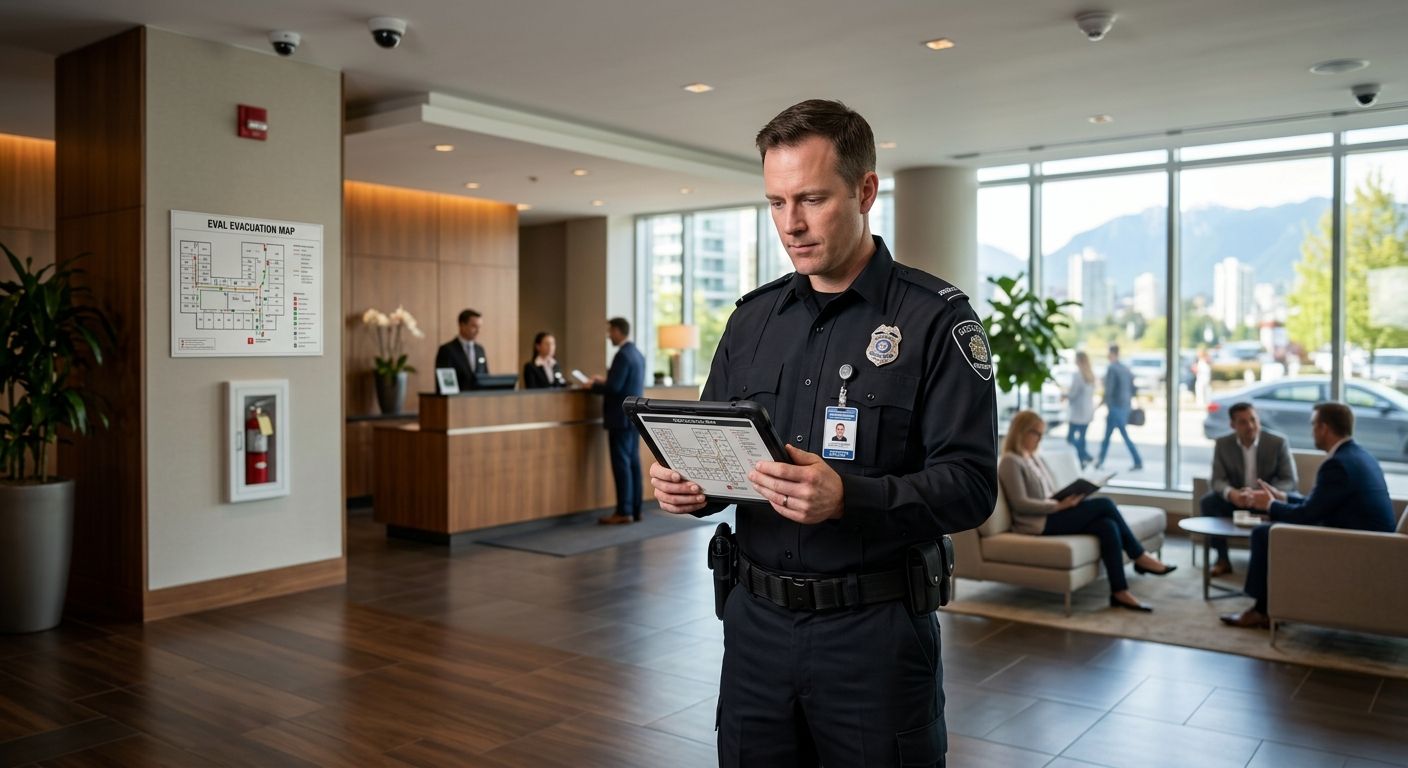
    With audit findings in hand, draft your written hotel emergency response plan. The document must include printed evacuation maps in all guest rooms and common areas, an emergency contact list, a clear communication tree, and role assignments for every shift. Align the plan with the BC Safety Standards Act and the BC Security Services Act to ensure all security personnel hold valid licenses. We advise having the document reviewed by a licensed security professional, such as our team at Regent Security, to verify compliance. Including 24/7 emergency contact numbers and the names of assigned professional security guards ensures rapid response. Incorporate detailed evacuation routes and assembly points, and specify how communication is escalated during a crisis. This written plan becomes the central reference for training and drills, so it must be clear and actionable.

    Staff Training and Emergency Drill Schedules

    Even the best plan requires regular practice. We recommend quarterly drills including tabletop exercises and full-scale evacuations. Your night manager must hold a valid BC-licensed security certification, and all front-line staff should receive first aid and CPR training. Drills must cover day and night shifts to ensure 24/7 readiness, and after-action reviews should identify gaps. Training should also cover digital visitor management, ID verification, and alarm response specific to your property. All concierge and security staff must participate, and training records should be maintained for compliance. By building muscle memory, you help provide guests with the peace of mind that comes from a well-trained team and unmatched security expertise.

    Integrating Access Control Systems into the Response Plan

    Modern hotels rely on keycard, biometric, or mobile-key technologies to secure guest floors and back-of-house areas. Integrating these hotel access control systems into your emergency plan means establishing protocols for distributing master keycards during evacuation, auditing electronic access logs after an incident, and preventing unauthorized back-of-house entry. A clear chain of custody for master keys and a designated security officer for lockdown supports a swift, controlled evacuation. We recommend including these details to maintain security without impeding emergency response.

    With your plan developed and staff trained, regular updates and post-incident reviews will keep your response effective.

    Information is for general guidance and not a substitute for professional or legal advice. Consult a licensed security professional for site-specific advice.

    Best Practices for Sustaining Hotel Emergency Preparedness

    Sustaining a robust hotel emergency response plan requires continuous refinement. We outline four key practices — routine audits, advanced technology, and a 24/7 security partnership — that keep your emergency protocols current and effective across British Columbia.

    Regular Audits, Drills, and Plan Review Cycles

    Annual third-party security audits, quarterly internal drills, and monthly plan reviews form the backbone of a living emergency program. Our security audits, performed by professional licensed security guards, follow ASIS International standards and assess your property’s compliance with hotel security protocols Canada requires, specifically the BC Security Services Act and privacy legislation such as PIPA. During a site walkthrough, we evaluate physical barriers, access control effectiveness, visitor management processes, and staff readiness through scenario-based exercises. Quarterly internal drills test evacuation routes and communication chains under simulated stress, while monthly plan reviews keep emergency call lists, alarm testing procedures, and crisis management checklists aligned with operational changes. These drills also test interdepartmental coordination and the use of emergency equipment such as fire extinguishers and first-aid kits. This structured review cycle not only meets regulatory expectations in British Columbia but also builds staff confidence and reduces incident response times.

    Leveraging Emerging Technology: Biometric Access and Contactless Entry

    Modern hotel access control systems have evolved well beyond basic keycards. We recommend integrating biometric access control for high-value areas, such as back-of-house storage, liquor rooms, and server closets, where fingerprint or facial-recognition readers add an extra layer of security. For guest floors, contactless mobile key entry via smartphone apps streamlines check-in and eliminates the risk of lost or cloned cards. Combining these access upgrades with AI-driven CCTV analytics enables real-time threat detection; our 24/7 remote monitoring service uses intelligent video analysis to flag tailgating, unauthorized area entry, and suspicious loitering, instantly alerting on-site staff or our emergency response centre. These technology layers work together to strengthen your preparedness posture without disrupting the guest experience.

    Partnering with a Professional Security Provider for 24/7 Readiness

    Even the best plans depend on rapid, reliable execution when an emergency escalates outside business hours. Regent Security provides around-the-clock emergency guard deployment across Vancouver, Surrey, Burnaby, and throughout the Lower Mainland. When a fire alarm failure, break-in, or medical crisis strikes, our 24/7 hotline dispatches professional licensed security guards, often on the same day, to secure the site, manage evacuations, or provide emergency fire watch. We monitor alarms, dispatch mobile patrols, and coordinate with local fire services to contain threats before they disrupt operations. All deployments are based on a custom site assessment, ensuring the response aligns with your property’s unique risks and existing protocols. With over 25 years of unmatched security expertise and a team of more than 200 licensed professionals, we provide the 24/7 partnership that hoteliers need; your peace of mind is our priority.

    Learning from Incidents: Auditing Access Logs and Continuous Improvement

    Every security incident offers an opportunity to strengthen your hotel emergency response plan. A structured post-incident review that audits access control logs, especially when integrated with visitor management and BAC systems, reveals how vulnerabilities were exploited. For instance, analyzing badge-in records after an unauthorized access incident can spotlight gaps in off-hours staffing. These insights directly inform updates to response protocols, staff training, and technology configurations. By making this feedback loop a standard practice, you drive continuous improvement that keeps your emergency preparedness plan ahead of evolving threats.

    Elevating Your Hotel’s Safety with a Comprehensive Emergency Plan

    A holistic security program is incomplete without a comprehensive emergency plan. An effective hotel emergency response plan—built around evacuation procedures, emergency communication protocols, and coordination with local first responders in Vancouver and the Lower Mainland—helps reduce confusion and improve outcomes. ASIS International standards affirm that such plans must be tailored to each property’s layout and risk profile, and comply with hotel security protocols in Canada and British Columbia’s building and fire codes.

    In our work across British Columbia, professional licensed security guards are central to plan execution. They direct evacuations, manage access points, and liaise with fire, police, and EMS. Integrating hotel access control systems further secures exits and prevents unauthorized entry, allowing only authorised personnel to move freely during an emergency.

    Regent Security’s site assessments combine 24/7 monitoring, trained personnel, and integrated technology to design a custom plan for your hotel. While no plan eliminates all risk, consistent training and real-time oversight reduce vulnerability and speed response. 24/7 vigilance helps detect threats early, keeping your property safer.

    Your peace of mind comes from knowing your hotel emergency response plan is both actionable and compliant. We invite you to build your security quote—our tailored assessments are the first step. These plan components are reinforced by access control and live CCTV monitoring, which we will explore next.

    Resources

  • Hotel Security Protocols Canada: Essential Guide 2026

    Hotel Security Protocols Canada: Essential Guide 2026

    Table of Contents

    Understanding Hotel Security Protocols in British Columbia

    To ensure guest safety, BC hotels implement a range of protocols—from visitor management to emergency response—each tailored to the property’s unique needs. When it comes to hotel security protocols Canada, these measures form a layered defense.

    Visitor management in hotel lobbies benefits from our experience with high-traffic commercial buildings. Digital sign-in kiosks and pre-registration portals streamline guest check-in, reduce wait times, and improve tracking. Professional licensed security guards from Regent Security deploy these systems with 24/7 coverage, delivering your peace of mind.

    Hotel access control systems like keyless entry, biometric verification, and mobile credentials restrict access to sensitive floors. Trained teams manage these solutions under our unmatched security expertise.

    Hotel emergency response procedures are customized per site assessment, addressing fire, medical, and lockdown events. Response times may vary, and all services are subject to site assessment and must comply with BC’s PIPA privacy law.

    Pre-Implementation Security Assessment

    We begin every engagement with a pre-implementation security assessment designed to align with established hotel security protocols in Canada. This evaluation is conducted by our licensed, experienced security professionals and forms the foundation of any effective protection strategy.

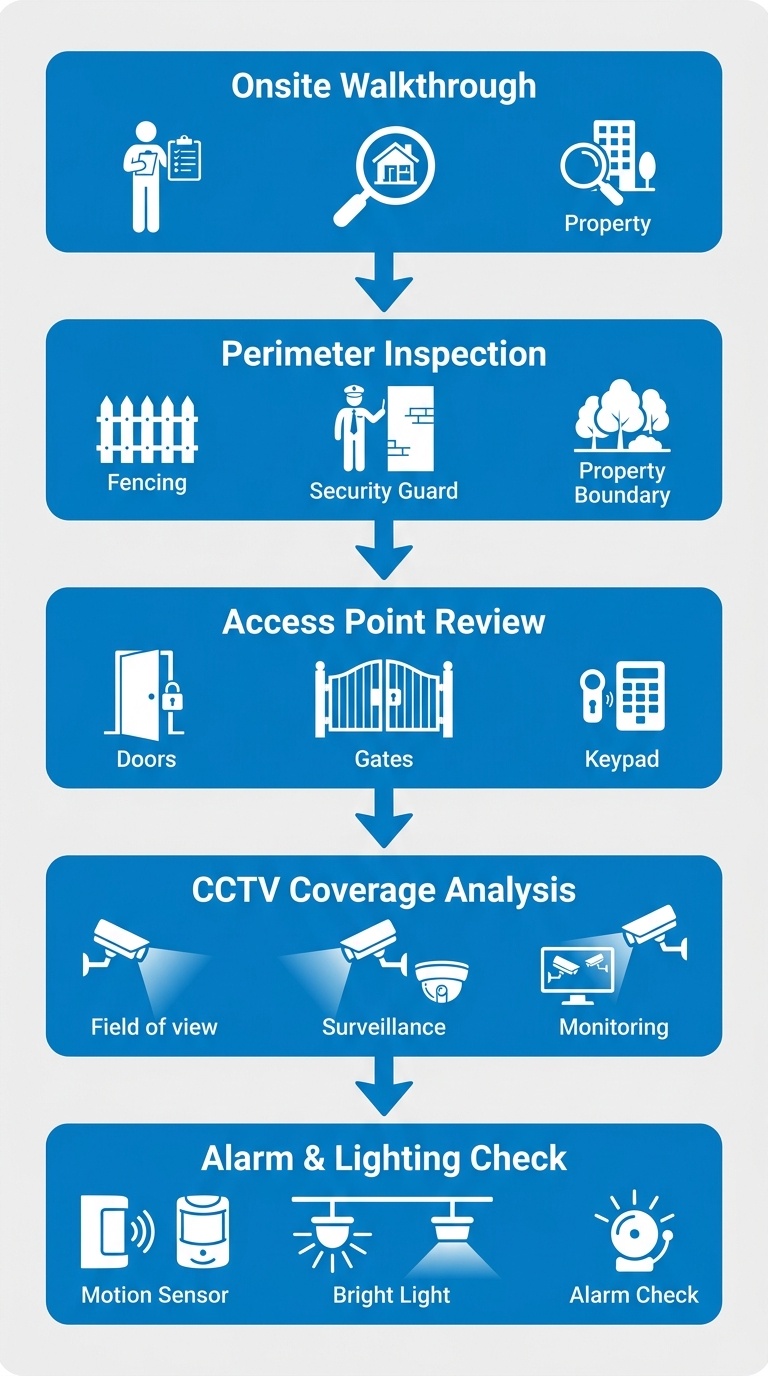
    Our comprehensive onsite walkthrough examines every layer of your property:

    • Perimeter inspection to identify physical vulnerabilities
    • Access point review, including existing hotel access control systems
    • CCTV coverage analysis to detect blind spots and coverage gaps
    • Existing alarm and lighting condition check
    • Review of current hotel emergency response procedures

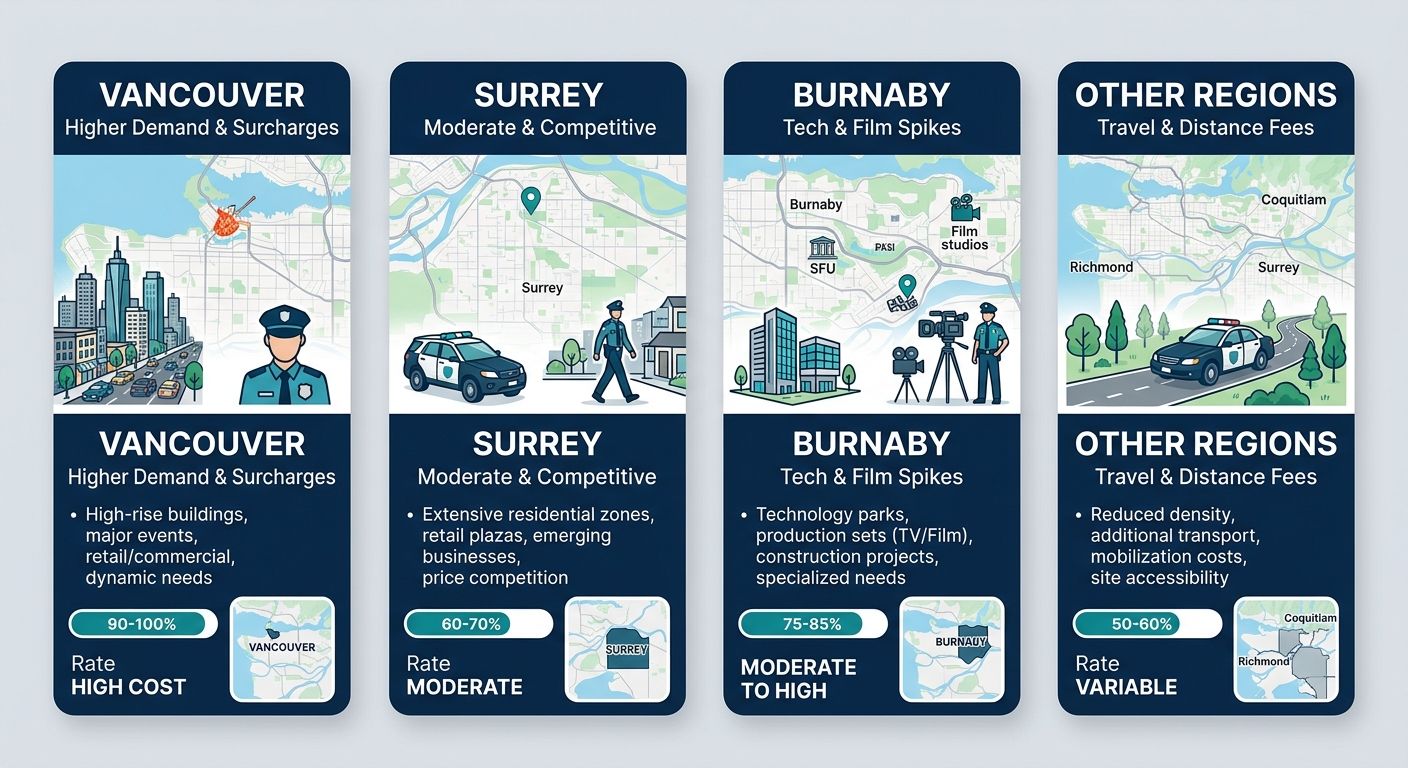
    This process identifies potential risks and security gaps, then translates those findings into a custom security plan. Based on the assessment, we provide a transparent breakdown of the security guard cost in British Columbia tailored to your property’s needs.

    For strata councils, this process directly supports due diligence requirements under BC regulations. Services are subject to site assessment and custom quotation; results and pricing may vary.

    Diagram of pre-implementation security assessment process with five key stages.

    Five-step pre-implementation security assessment process.

    Once the assessment is complete, we move to designing a security plan tailored to your property.

    To uphold robust hotel security protocols in Canada, it’s essential to conduct a systematic property security audit and risk assessment — a process that identifies vulnerabilities and lays the groundwork for targeted improvements. A comprehensive audit examines several critical areas:

    • Access control: assess the integrity of hotel access control systems, including keycard management and entry-point locks.
    • Visitor management: evaluate your visitor management protocols to ensure they effectively screen and track non-employees.
    • Surveillance: review CCTV coverage and camera placement, always in compliance with applicable privacy laws.
    • Emergency response: test hotel emergency response procedures — alarm activation, evacuation plans, and staff training.
    • Perimeter security: inspect lighting, fencing, locks, and physical barriers.

    A structured, four-step approach yields the most reliable results: (1) conduct a thorough walkthrough of all areas, (2) interview frontline staff — front desk, security, and maintenance — to uncover operational gaps, (3) review incident logs and security documentation, and (4) score identified risks based on likelihood and impact. Adopting the risk assessment framework set out by ASIS International ensures your audit aligns with industry-recognized standards.

    Security audits should be performed annually or whenever operations or threat levels change. While no assessment can eliminate all risk, it provides a data-driven foundation for informed decision-making. For a tailored, on-site evaluation, consider engaging a professional security provider (services are subject to site assessment and custom quotation).

    Implement Access Control Systems

    As part of modern hotel security protocols in Canada, implementing access control systems is a critical next step to protect guests and assets. Our approach at Regent Security Services Ltd. begins with a comprehensive site assessment to identify vulnerable entry points and tailor a solution that fits your property’s unique layout and operational needs.

    Robust hotel access control systems include keyless entry using cards or mobile credentials and biometric options such as fingerprint or facial recognition. Following standards recommended by ASIS International security organization helps ensure your system meets industry best practices. When integrated with 24/7 CCTV monitoring and alarm systems, these layered controls can significantly enhance your property’s overall security posture and provide your peace of mind.

    Partnering with a licensed security provider ensures compliance with British Columbia’s Personal Information Protection Act and applicable building codes. Our unmatched security expertise guides you through receiving a custom quote and professional installation, all backed by our 25 years of service. Services are subject to site assessment and custom quotation; results and pricing may vary.

    With access control in place, hotels strengthen their ability to manage emergencies effectively — a topic we cover in the next section.

    Deploy CCTV and Live Monitoring

    For robust hotel security protocols in Canada, deploying CCTV and live monitoring is essential. We install IP cameras with PTZ capabilities at all entrances, common areas, loading docks, and parking facilities. Our professional licensed security guards provide 24/7 monitoring, enabling immediate intervention rather than after-the-fact review. This 24/7 vigilance deters incidents and triggers rapid hotel emergency response procedures.

    For multi-site properties, our remote monitoring provides real-time oversight from a central station. We integrate CCTV with hotel access control systems to link entry logs with video for stronger intelligence. Deployments comply with BC’s PIPA: cameras are signposted and confined to public areas. Following Security Industry Association benchmarks, we start with a site-specific assessment and custom quote.

    This tailored approach, backed by unmatched security expertise, delivers your peace of mind. By implementing proactive surveillance aligned with hotel security protocols in Canada, we help properties reduce risk and respond swiftly. All services are subject to a site assessment and must comply with privacy laws.

    Develop Emergency Response and Crisis Management Plans

    Effective hotel security protocols in Canada require a crisis management plan that extends beyond physical barriers and access control to include:

    • Clear evacuation routes and assembly points.
    • A communication chain integrating hotel access control systems to secure exits and alert guests.
    • Role assignments for staff and professional security guards to manage crowds and coordinate with first responders.

    Regent Security’s internal FAQ recommends that plans be documented, reviewed annually, and reinforced through drills. Professional licensed security guards lead evacuations, coordinate with first responders, and manage on-site communications. Their 24/7 availability ensures your peace of mind, knowing trained professionals can execute the plan effectively. Regular rehearsals of hotel emergency response procedures ensure the team responds quickly. Aligning your plan with recognized hotel security protocols in Canada demonstrates compliance and a commitment to guest safety.

    Because every hotel’s layout, room count, and risks differ, plans must be site-specific. For proven frameworks, consult Security Industry Association resources. We recommend hotel management in Vancouver, British Columbia, work with a licensed security professional to tailor the plan to their property’s needs.

    Train Concierge and Security Staff on Protocols

    Implementing robust hotel security protocols in Canada requires more than written policies — it demands thorough training for every concierge and security team member. This step transforms protocols into reliable everyday practice.

    Our training programs draw from Regent Security’s digital visitor management protocols, covering digital check-in, ID verification, temporary badge issuance, and accurate digital log maintenance. Staff learn to enforce access control policies consistently, including visitor sign-in and escort procedures. Training on hotel access control systems ensures they can operate digital kiosks and badge printers, while regular emergency procedure drills for fire, medical, and evacuation scenarios build muscle memory and the confidence to respond effectively 24/7. Throughout, we emphasize privacy compliance with British Columbia’s Personal Information Protection Act when handling personal data.

    The success of security protocols at Canadian hotels hinges on well-trained staff. Regent Security provides customized training for each property, led by our professional licensed security guards. This hands-on preparation gives management peace of mind, though outcomes vary with site-specific factors and professional consultation.

    Integrate Visitor Management Protocols

    Beyond access control and surveillance, a comprehensive security strategy includes well-defined visitor management. Drawing on our field expertise with high-traffic commercial buildings, we recommend integrating digital visitor management protocols that combine check-in automation with professional oversight. Effective hotel security protocols in Canada start with a seamless guest entry process.

    Assess visitor flow bottlenecks first. Then deploy digital tools—badge printers, self-check kiosks, and log software—that integrate with your hotel access control systems.

    Temporary badges can then restrict access to authorized floors and expire automatically. For verification, staff must require government-issued ID or a hotel booking confirmation before issuing a badge. Logs must comply with B.C.’s PIPA; consult a licensed security professional for site-specific compliance.

    Professional licensed security guards provide 24/7 oversight, handling escalations and hotel emergency response procedures. Pilot the system first, gather feedback, and refine protocols before a full rollout.

    Drawing on over 25 years of experience in Vancouver, we offer tailored integration support—custom quotes are available upon request. All services subject to site assessment and custom quotation; results may vary.

    Ensure Compliance with the BC Security Services Act

    Effective hotel security protocols in Canada require a strong legal framework. The British Columbia Legislative Assembly enacted the Security Services Act to regulate security providers across British Columbia. Under the Security Services Act, each security guard must obtain a provincial license and complete at least the mandated training hours. Security firms operating in British Columbia must also be licensed, ensuring accountability at every level. The legislation demands meticulous record-keeping: incident logs, patrol reports, and service agreements must be documented. Non-compliance can bring fines, license suspension, or cancellation. BC security regulations extend to physical measures like hotel access control systems and mandate that properties develop and rehearse hotel emergency response procedures. At Regent Security, compliance is only the starting point. Every one of our guards holds a current license and trains beyond the Act’s minimum standards. We conduct regular internal audits of patrol reports, incident documentation, and site procedures to confirm full alignment with provincial law. Our professional licensed security guards bring unmatched security expertise to your property, providing you with peace of mind built on a legally sound foundation.

    Overcoming Common Hotel Security Implementation Challenges

    Yet even the best-planned hotel security can face hurdles during implementation. For BC hotels implementing hotel security protocols in Canada, three common obstacles emerge: budget uncertainty, integration with existing infrastructure, and staff training for new procedures. These are common but entirely manageable with the right partner.

    Many properties face budget uncertainty because pricing in BC often lacks transparency. We overcome this by offering a detailed site-specific assessment that produces a custom quote—no hidden fees, no guesswork. Our team’s cost breakdown helps you plan for guarding, monitoring, and access control without surprises.

    Integrating modern security technology with legacy CCTV and access control hardware can be daunting. Our hotel access control systems are engineered for compatibility, allowing seamless integration with your existing infrastructure. This approach minimizes disruption and upgrade costs, helping your property boost security without starting from scratch.

    Staff training presents another hurdle, particularly when new emergency protocols are introduced. Our hotel emergency response procedures are clearly documented and practiced during onboarding, so your team knows exactly how to react in real incidents. We also conduct comprehensive security audits to ensure your systems align with BC privacy laws like the Personal Information Protection Act (PIPA). While we don’t provide legal advice, these assessments identify compliance gaps and recommend the right safeguards. This proactive approach significantly reduces common security risks.

    At Regent Security, we’ve guided numerous BC hotels through these implementation challenges. Our process begins with a free site assessment and custom security quote—just like we’ve done for over 1,000 BC clients. Contact us to start building a tailored protection plan for your property.

    Sustaining Hotel Security Excellence in British Columbia

    At Regent Security, our commitment to hotel security excellence in British Columbia goes far beyond initial system deployment, continuously refining hotel security protocols in Canada to align with evolving BC regulations. Ongoing training ensures our team of over 100 professional licensed security guards stays ahead of emerging threats through monthly refresher courses on de-escalation, guest safety, and privacy compliance. We monitor all hotel access control systems in British Columbia 24/7, proactively applying firmware updates, reviewing access logs, and conducting vulnerability assessments to prevent unauthorized entry. In partnership with hotel management, we rigorously review and drill hotel emergency response procedures in British Columbia, enabling lightning-fast, coordinated reactions during fire, medical, or intrusion events. This ongoing refinement of hotel security protocols in Canada sets the standard for reliable, compliant protection. Every personalized security plan undergoes periodic reassessment, and coverage adjustments are easily initiated via our Build Your Security Quote process for a no-obligation consultation. Backed by 15+ years of experience and round-the-clock support, your peace of mind remains our unwavering mission.

    Resources

  • Security Guard Cost BC: 2026 Pricing Breakdown

    Security Guard Cost BC: 2026 Pricing Breakdown

    Table of Contents

    Security Guard Cost in British Columbia: What Hotel Operators Need to Know

    Given these security needs, hotel operators naturally ask about security guard cost in BC. Several factors influence private security guard pricing in BC: coverage hours, number of guards required, site size, and risk level. Security guard hourly rates in BC also reflect guard qualifications—guards with ASIS International security certifications may command higher rates but provide greater expertise. At Regent Security, we don’t offer fixed-rate packages; services are subject to a site assessment and custom quotation, and final pricing may vary. Our professional licensed security guards conduct that assessment to understand your hotel’s unique needs and provide a tailored proposal. With over 100 licensed professionals and 24/7 availability, our unmatched security expertise ensures your peace of mind. To see how these factors apply to your property, we invite you to use the Build Your Security Quote tool.

    Understanding the security guard cost in Lower Mainland helps businesses budget effectively. When evaluating security guard cost bc, regional factors create distinct price bands.

    The table below highlights key cost trends across our service areas:

    Area Comparison of Security Guard Hourly Rates
    LocationAverage Hourly RateKey Considerations
    Vancouver$XX – $XX per hourHigher demand; amenities surcharges; union presence may apply
    Surrey$XX – $XX per hourGrowing commercial corridor; competitive market
    Burnaby$XX – $XX per hourModerate cost; tech/film hub demand spikes
    Other BC Regions$XX – $XX per hourLower baseline; travel/mileage may apply

    According to our analysis of security guard hourly rates bc, Vancouver’s urban density and union sites push costs to the higher end. Burnaby’s tech and film activity can temporarily shift private security guard pricing bc upward during production cycles, while Surrey’s competitive landscape keeps rates moderate. In smaller BC communities, lower baseline wages are partially offset by travel or mileage fees. Our internal cost data and Government of Canada Job Bank figures confirm that labour costs for professional licensed security guards vary by location.

    Infographic map highlighting higher, moderate, and lower security guard cost ranges across Vancouver, Surrey, Burnaby, and other Lower Mainland regions with professional callout boxes and icons.
    Security guard cost trends across Lower Mainland regions

    Every custom quote we provide accounts for site-specific variables like guard qualifications, shift duration, and technology needs. Rates are approximate; contact us for a tailored assessment. Where your safety is our story, we deliver peace of mind through solutions built for your property’s unique risks.

    Hotel Security Services Available for BC Properties

    Regent Security draws on more than 15 years of experience and over 1,000 clients served to deliver comprehensive protection for hotels across the Lower Mainland. Understanding that every property is unique, we approach security guard cost in British Columbia through a lens of value-driven, custom solutions — never one-size-fits-all pricing.

    • On-site security guards: Our professional licensed security guards provide 24/7 on-site presence, trained and fully licensed under the BC Security Services Act. While specific security guard hourly rates across BC reflect each property’s footprint and risk profile, all proposals result in a competitive custom quote after a detailed site assessment.
    • Live and remote CCTV monitoring: 24/7 surveillance with AI-powered anomaly detection and seamless integration with access control systems.
    • Access control, alarm response and intrusion detection: Installation and monitoring of keyless and biometric entry, alarm services, intrusion detection, and rapid alarm response that can help protect guest areas and back-of-house.
    • Mobile patrols, concierge services and fire watch: Uniformed patrols deter unwanted activity, dedicated concierge teams manage front-desk security, and certified fire watch services maintain compliance when fire systems are offline.

    Every Regent Security plan begins with a professional site assessment. We tailor services to your hotel’s layout and operational needs, ensuring that private security guard pricing for BC hotels reflects the exact scope of protection required. All proposals include a custom, site-specific quote built from that evaluation.

    Please note that services are subject to site assessment and custom quotation; results and pricing may vary. CCTV and surveillance services comply with applicable privacy laws, including PIPA in BC.

    Contact us or Build Your Security Quote to discuss your hotel’s unique needs and experience the peace of mind that comes with unmatched security expertise. While this section focuses on hotel properties, many of the same services are available for residential strata buildings — learn more about strata building security in Vancouver.

    Key Factors That Influence Security Guard Rates in British Columbia

    The security guard cost BC varies based on five main factors: guard training and licensing, scope of services, geographic location, shift timing, and site risk level. Drawing on our internal expertise and industry standards, we outline these key drivers below.

    First, the training and licensing of security personnel is a primary factor. Professional licensed security guards who hold advanced certifications recognized by ASIS International or use-of-force training bring enhanced skills that influence overall pricing.

    Second, the scope of services required—whether basic patrol or integrated access control and CCTV monitoring—determines resource needs. Private security guard pricing BC often reflects the complexity and technology integration at a site.

    Third, location within British Columbia plays a role. In Vancouver’s dense urban core, operational costs differ from those in Surrey or Burnaby, and official Canada Job Bank services provide wage data that sets baseline expectations for security guard cost BC.

    Fourth, shift timing and duration impact pricing. Security guard hourly rates BC may include premiums for overnight, weekend, or holiday shifts, and long-term contracts often offer economies of scale.

    Finally, the inherent risk level at the site influences rates. A construction site requires more rigorous measures than a hotel lobby, affecting costs.

    Getting a Custom Security Guard Quote for Your Hotel

    Now that you understand the range of hotel security services available, let’s discuss how to get a custom security guard quote for your property. When exploring security guard cost in BC, hotel operators will find that Regent Security provides personalized quotes based on a thorough site assessment — never a one-size-fits-all price list.

    Our quote reflects three main factors: hotel size (number of rooms and entrances), required coverage hours (24/7 or part-time scheduling), and integration needs such as CCTV, access control, or mobile patrols. Every quote includes professional licensed security guards, necessary equipment, and monitoring where applicable. To see an example of how we create custom quotes for different property types, visit our FAQ on construction site security cost in Lower Mainland. While hourly rates for security guards in BC depend on deployment scope and technology used, private security guard pricing in BC always reflects your hotel’s unique vulnerabilities and operational demands.

    With our unmatched security expertise, we design a plan that delivers 24/7 coverage and your peace of mind. Contact us today to Build Your Security Quote. Please note that services are subject to site assessment and custom quotation; results and pricing may vary.

    Partnering with Regent Security for Professional Hotel Protection

    When evaluating security guard cost in BC, hotels choose Regent Security for unmatched protection. Our 24/7 rapid alarm response helps deliver professional hotel protection for Your peace of mind. We provide custom quotes that reflect site-specific needs, not generic hourly rates.

    Beyond hotels, we also serve other sectors—learn more about our construction site security cost in Lower Mainland. Contact us today for private security guard pricing in BC tailored to your property and Build Your Security Quote.

    Resources

  • Remote Video Monitoring for Property Managers: Complete Guide

    Remote Video Monitoring for Property Managers: Complete Guide

    Table of Contents

    Remote Video Monitoring for Property Managers

    Building on our previous overview of video surveillance, remote video monitoring for property managers provides a proactive security layer. A network of cameras transmits live feeds to a central station where our operators monitor activity continuously, enabling swift response to any incident. With over 15 years of experience and more than 100 licensed professionals, we deliver dependable, 24/7 coverage tailored for large or multi-site properties. Allowing tailored protocols that suit each site’s operational needs.

    This approach reduces the need for expensive on-site patrols while still acting as a virtual guard presence. Property managers overseeing commercial plazas, construction projects, or high-traffic parking areas gain immediate visibility and rapid intervention capability. Our CCTV monitoring combines high-resolution cameras with AI-powered threat detection software. When operators spot suspicious behavior, they can dispatch mobile guards or contact emergency services, creating a layered defense that works seamlessly with your existing alarm and access control systems.

    These virtual guard solutions fit naturally alongside our on-site security services. To explore how we might customize remote monitoring for hotels, retail centers, or industrial facilities, please request a personalized quote for your property.

    Avigilon Control Center

    Avigilon Control Center (ACC) is a centralized video management software platform that gives property managers the power to oversee security cameras across multiple locations from a single interface. This powerful solution serves as the backbone for remote video monitoring for property managers in Vancouver and throughout British Columbia, enabling real-time awareness without the need for constant on-site supervision.

    The platform leverages advanced video analytics to transform how hotels and commercial properties handle security. Built-in intelligence detects motion, tracks objects, and analyses patterns to provide proactive alerts. Our team uses these insights through CCTV monitoring to significantly reduce false alarms and focus attention on genuine security events as they unfold.

    With ACC, property managers gain live video monitoring capabilities that deliver true flexibility. The system supports secure remote access from any device, allowing feeds to be checked anytime, anywhere. This connectivity means you are never far from what matters most at your property, reinforcing Your peace of mind around the clock.

    This same platform is what enables our virtual guard services to function as an effective alternative to full-time on-site staff. By integrating ACC with our monitoring centre, we deliver Unmatched security expertise and rapid response, ensuring comprehensive protection flows seamlessly from proactive digital oversight to physical intervention when required.

    Eagle Eye Networks Cloud VMS

    Property managers today need seamless surveillance without on-site hardware hassles—that’s where Eagle Eye Networks Cloud VMS comes in. Our cloud-based video management system replaces traditional DVRs with continuous, off-site recording, giving you remote video monitoring for property managers anytime, anywhere.

    With live video monitoring from any device, you gain real-time visibility across all your locations to spot issues as they happen. The system scales effortlessly, so adding cameras at new properties is instant. Because all footage is stored securely in the cloud, even if on-site equipment is tampered with, your recordings remain safe.

    By maintaining tamper-proof footage, this technology also supports international crime prevention—surveillance data stays accessible when it matters most. Our virtual guard services complement the platform, turning passive cameras into proactive protection with trained professionals monitoring feeds around the clock.

    Built on unmatched security expertise, Eagle Eye Networks Cloud VMS integrates directly with Regent Security’s access control and on-site guard solutions, creating one unified, technology-enabled defence for your properties.

    Verkada Command

    Building on our comprehensive remote monitoring capabilities, Verkada Command is the cloud-based video management platform that powers remote video monitoring for property managers. We deliver unmatched security expertise through this technology backbone, giving you the ability to view live feeds, review recorded footage, and manage security operations from any web browser or mobile device. This live video monitoring capability eliminates the need for on-premise hardware, substantially reducing your maintenance burden while ensuring your property stays visible around the clock.

    Verkada Command goes well beyond legacy DVR systems by embedding AI-powered motion detection and intelligent alerting directly into the workflow. When the platform identifies unusual activity, it instantly notifies our team so we can assess the situation and escalate appropriately. The system meets rigorous cybersecurity standards, operating in alignment with guidelines published by the National Security Agency, which validates the data-protection controls that safeguard your surveillance environment.

    This platform is the engine behind our virtual guard services, transforming passive cameras into an active, monitored security layer without demanding additional infrastructure on your side. Your peace of mind, anytime, anywhere, flows from this seamless integration, and the same always-on intelligence will carry forward as we explore how our virtual guard teams respond to real-time alerts in the next section.

    Rhombus Systems

    We deliver modern property protection through Rhombus Systems, a cloud-based unified security platform that integrates video surveillance, access control, and environmental sensing. Its remote video monitoring for property managers provides real-time oversight without the need for constant on-site patrols.

    The platform combines live video monitoring with intelligent alert analysis and cloud-based video storage, enabling rapid detection of suspicious activity. When an event triggers an alarm, our virtual guard services dispatch trained professionals to assess the situation and intervene according to established protocols.

    Our platform supports 24/7 fire monitoring, aligning with the latest fire prevention guidelines published by the fire chiefs association. According to the Canadian Association of Fire Chiefs, remote technology that delivers early warning and supports emergency response is a cornerstone of modern life-safety compliance in commercial buildings.

    For property managers, this means faster response times, reduced reliance on costly physical patrols, and the ability to monitor properties anytime, anywhere. Your peace of mind is built on same-day deployment and the support of over 100 licensed security professionals.

    Remote Video Monitoring Software Comparison

    Choosing the right remote video monitoring for property managers in Vancouver depends on your property’s size, budget, and security priorities. According to the United Nations Office on Drugs and Crime (UNODC), video surveillance helps deter property crime, making an informed platform decision essential. Drawing on vendor documentation and our hands-on deployment experience at Regent Security, we’ve compared four leading platforms to help you evaluate your options. The table below summarizes their key differences.

    Feature Avigilon Control Center Eagle Eye Networks Cloud VMS Verkada Command Rhombus Systems
    Deployment On-premise Cloud Cloud Hybrid
    AI Analytics Advanced (appearance search) Basic (motion, tampering) Built-in (people, vehicle detection) Edge AI (CyberHawk)
    Pricing Model Perpetual license Monthly subscription Annual per-seat Per-camera subscription
    Best For Large enterprises needing deep analytics Multi-site cloud-first portfolios All-in-one integrated security Privacy-conscious, bandwidth-limited properties

    This comparison highlights a range of deployment approaches and analytic capabilities. Avigilon’s on-premise software suits large enterprises needing deep analytics, while Eagle Eye’s cloud system simplifies multi-site management. Verkada integrates tightly with access control, and Rhombus’s edge AI reduces bandwidth demand — an important factor for privacy-conscious properties with limited connectivity. Whether you prioritize deep analytics, cloud simplicity, or hybrid flexibility, the right live video monitoring platform can act as a modern virtual guard service for your building.

    Comparison infographic of four remote video monitoring software platforms: Avigilon Control Center, Eagle Eye Networks, Verkada Command, and Rhombus Systems, comparing deployment types, AI analytics capabilities, and best-use scenarios with blue and gray color scheme.

    Side-by-side comparison of leading remote video monitoring software platforms.

    We recommend consulting with our team to match a platform to your operational needs and local Vancouver requirements. Our experts serve property managers across Vancouver, Burnaby, and Surrey — reach out for a personalized security review.

    Choose the Right Partner for Remote Monitoring

    With an understanding of what remote monitoring offers, the next step is choosing a reliable partner for remote video monitoring for property managers. At Regent Security, we know that the right provider makes all the difference in safeguarding your assets.

    Experience & Expertise

    Look for a provider with a proven track record in live video monitoring and virtual guard services. As a licensed and insured company with more than 15 years in the field, we have served over 1,000 properties across Vancouver and the Lower Mainland.

    Technology & Reliability

    Advanced analytics and intelligent monitoring reduce false alerts and improve response times. We integrate remote video monitoring for property managers with 24/7 oversight, providing anytime visibility and peace of mind.

    24/7 Support & Rapid Deployment

    Our dedicated monitoring center is staffed around the clock by trained professionals. We offer same-day deployment and flexible service models designed to fit your property’s rhythm.

    Client References & Transparency

    Ask for references and verify client satisfaction. We stand behind our work and encourage you to speak with current clients who rely on our proactive protection.

    Customization & A Tailored Quote

    Every property is unique. We listen to your needs and build a remote monitoring plan that includes a custom quote — no generic packages. Contact Regent Security today for a personalized consultation. Your peace of mind is our priority.

    Resources