Table of Contents
The Role of a Professional Security Audit for Your Vancouver Property
Before you can protect your property in Vancouver, you need to understand its vulnerabilities. A professional security audit for business provides exactly that: a systematic, on-site evaluation of your physical security measures—access points, lighting, surveillance, and personnel protocols.
Properties in Vancouver with high foot traffic, dense commercial zones, or active construction sites demand a level of scrutiny beyond a casual walkthrough. While a quick do-it-yourself inspection may catch obvious gaps, it lacks the structured commercial risk assessment checklist and specialized tools—such as thermal or low-light assessments—that a professional uses.
Our team conducts a full physical security vulnerability assessment, identifying hidden weaknesses. We begin with a consultation, then inspect all entry points, equipment, and incident logs. Every finding is scored, and we deliver a prioritized report that forms the basis of a tailored security plan—whether it involves guard deployment, technology upgrades, or procedural changes. With over 1,000 clients and 15 years of experience, we deliver actionable recommendations. This rigorous approach ensures your security audit for business uncovers vulnerabilities that a casual walkthrough would miss.
Learn how Regent Security Company can tailor a security audit to your property in Vancouver, delivering unmatched security expertise and your peace of mind.
Understanding the Security Audit Process
Before you can protect your commercial property, you need a clear understanding of your vulnerabilities. A security audit for business provides that clarity by systematically evaluating your current security measures. Whether you run an office in Vancouver or a retail space in Burnaby, identifying your security gaps is the foundation of a safer future.
What Is a Security Audit?
A security audit is a comprehensive evaluation of your property’s physical security posture. Following standards established by the Canadian Security Association, we examine every element that contributes to your defence—from perimeter barriers and access control systems to lighting and surveillance coverage. This physical security vulnerability assessment goes beyond a simple checklist; it is a systematic process that identifies potential entry points for unauthorized individuals and weaknesses in alarm response protocols. A thorough audit accounts for both physical deterrents and operational procedures. We assess whether access control protocols are consistently enforced across all shifts and evaluate the effectiveness of security personnel training. By identifying gaps before they are exploited, you gain a concrete picture of your current vulnerabilities, enabling you to prioritize improvements and allocate resources efficiently.
Key Components of a Commercial Risk Assessment
A complete assessment touches on every layer of your physical defence. During a commercial risk assessment, our team examines the perimeter for fencing integrity or breaches, evaluates entry points for forced-entry resistance and lock functionality and tests lighting levels to eliminate shadowed areas. The perimeter inspection includes gates, walls and any natural barriers, while entry point analysis examines hinges, strike plates and electronic access control panels. Lighting evaluation covers both interior and exterior illumination, particularly around loading docks and parking areas—common incident locations. Alarm system testing simulates intrusion events to verify that central monitoring receives signals promptly, and CCTV coverage is mapped against site layout to identify blind spots. Finally, we observe security personnel performance, checking patrol patterns, incident response times and adherence to post orders. This methodical approach ensures no weak link is overlooked.
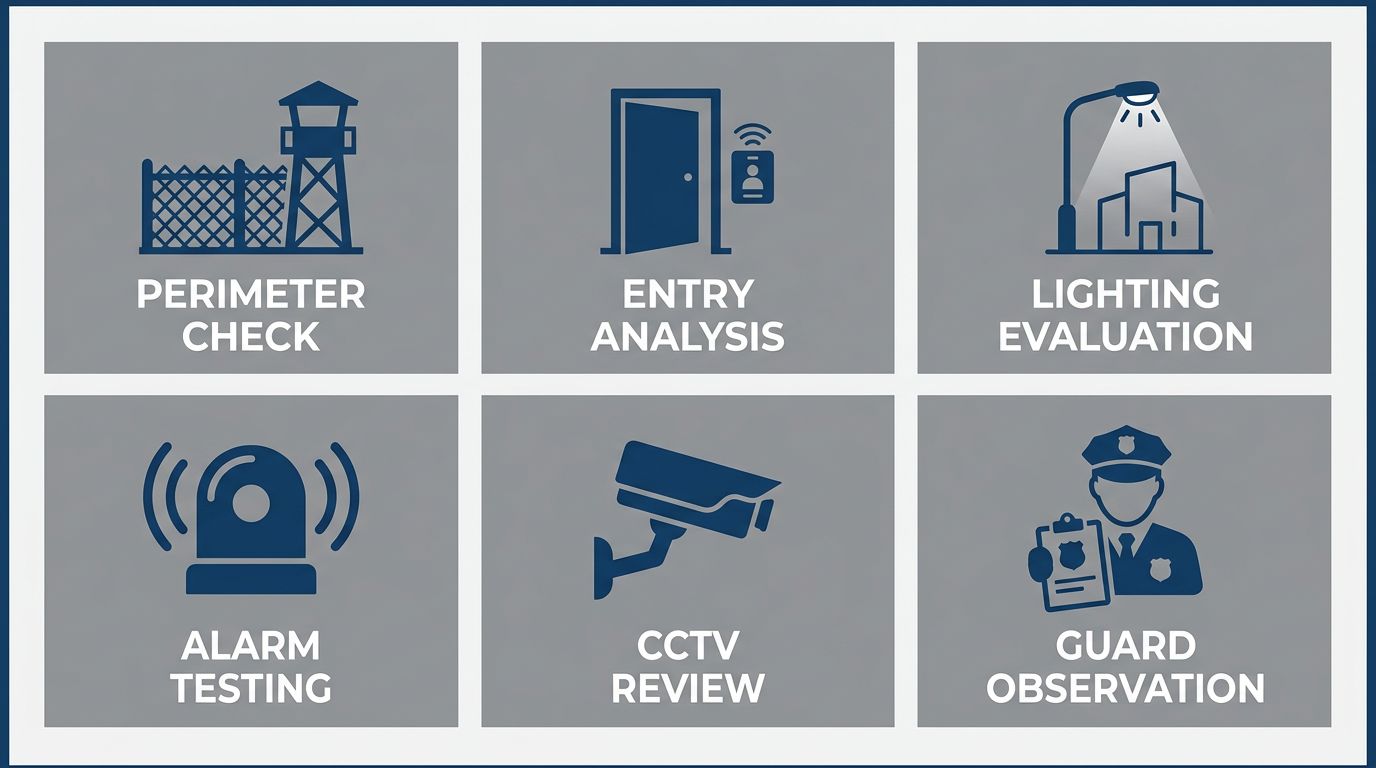
Key components of a professional security audit process.
Different business environments demand unique focuses, so we adapt our methodology to your specific property type.
Tailoring the Audit to Your Property Type
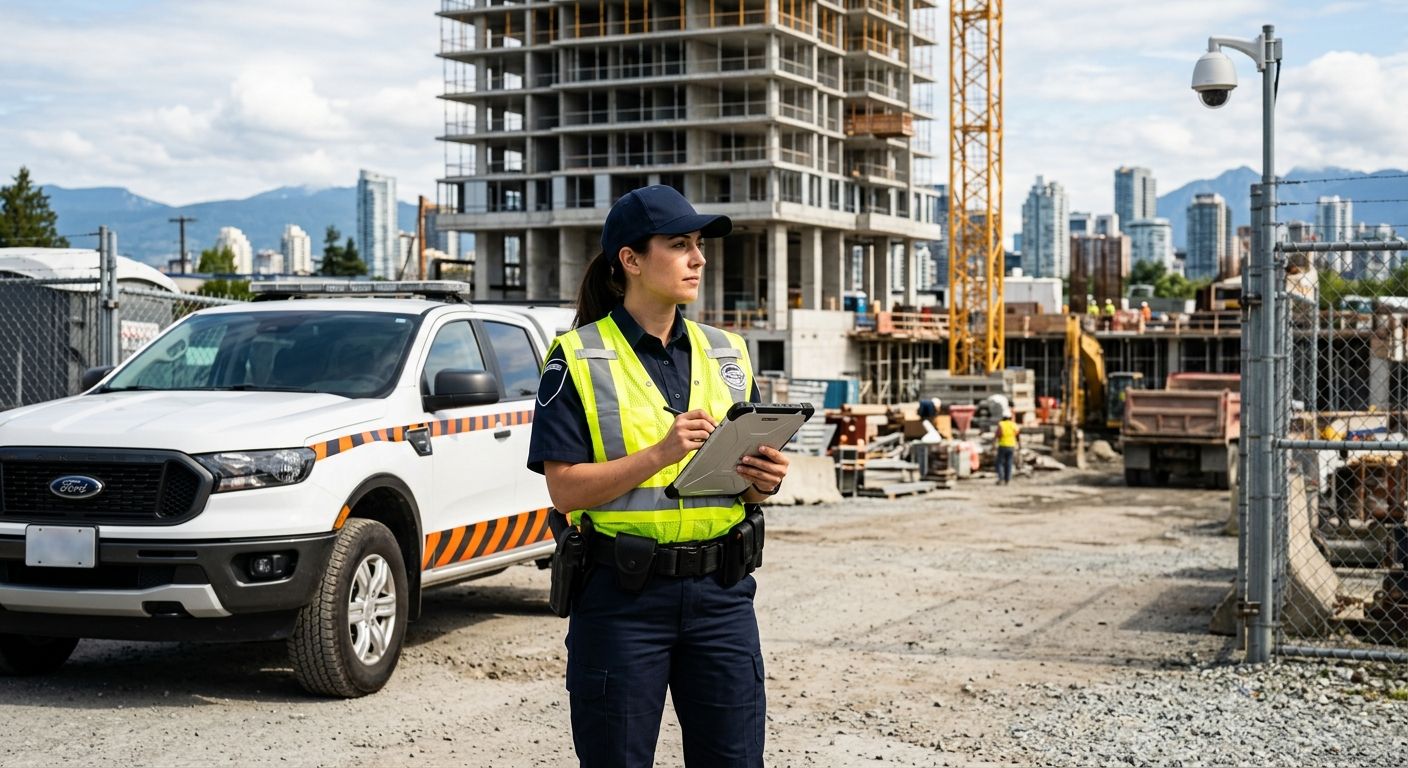
In the Lower Mainland, a security audit for business operations must account for your industry’s distinct risks. An office tower in Vancouver requires a different review than a construction site in Surrey. For offices, we concentrate on access control systems, after-hours entry procedures and CCTV coverage in common areas. Retail spaces benefit from loss prevention audits that track shoplifting patterns, monitor point-of-sale blind spots and evaluate undercover security team effectiveness. Construction sites—often targeted for theft and vandalism—demand rigorous perimeter checks and mobile patrol verification. Hotels require a blend of hospitality and security, so our audit includes lobby access control and coordination between front-desk concierge and security personnel. By drawing on our specialized services—building security, loss prevention, construction security and hotel-specific protection—we ensure every assessment aligns precisely with your operational realities. A tailored evaluation reveals the specific weaknesses that generic checks overlook, giving you a clear roadmap toward stronger protection and the peace of mind you deserve.
Key Benefits of Regular Security Audits
Welcome to Regent Security, where your safety is our story. A security audit for business is a strategic investment in your property’s resilience. Our unmatched security expertise helps commercial property managers in Vancouver and Burnaby identify hidden vulnerabilities, prioritize upgrades, and build a safer environment for tenants and employees.
Proactive Vulnerability Identification
Proactive vulnerability identification lies at the heart of every physical security vulnerability assessment we perform. During an audit, our specialists detect blind spots in CCTV coverage, expired lock cylinders, and inadequate lighting in parking lots or stairwells before they can be exploited. Uncovering these weaknesses reduces liability and prevents incidents. Even minor oversights like a failing access control reader can become entry points. By documenting issues in a comprehensive assessment, we give property managers an actionable plan to strengthen defenses before a breach occurs, significantly lowering risk profiles and insurance liabilities. In Vancouver commercial properties, this proactive approach is essential to maintaining a secure environment that discourages unauthorized access. Regular audits transform security from reactive to proactive, ensuring vulnerabilities are addressed before they lead to costly incidents.
Enhancing Tenant and Employee Peace of Mind
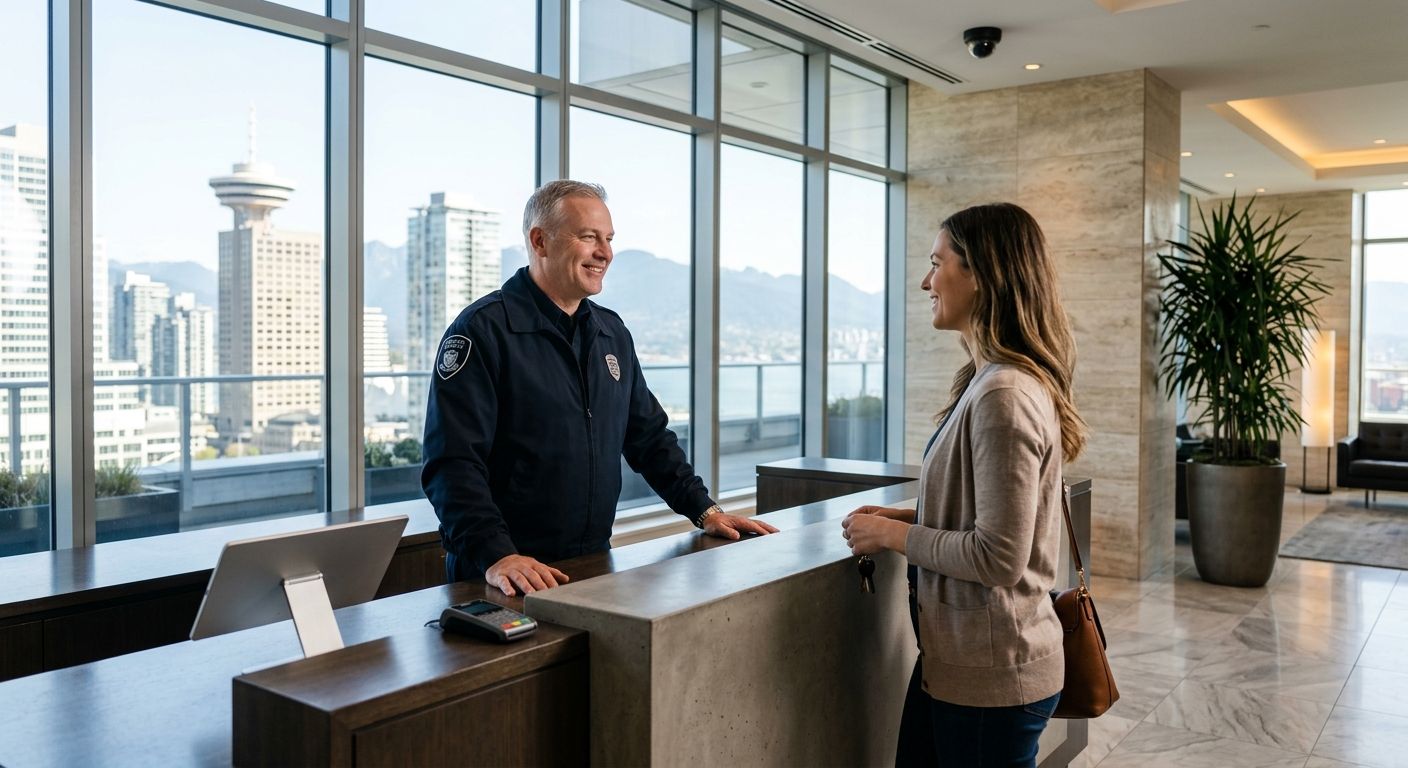
Enhancing tenant and employee peace of mind is a direct outcome of demonstrating a commitment to safety. Our commercial risk assessment checklist guides a systematic review of visitor management, emergency response, and access controls. When building occupants see that management invests in certified audits, they feel more confident. In Vancouver’s competitive commercial market, properties that prioritize safety see higher occupancy satisfaction and retention. Employees arrive knowing their workplace is systematically evaluated, while tenants appreciate visible improvements like better surveillance and controlled access. When audits are paired with concierge services that manage visitor screening, the sense of security multiplies, benefiting tenant renewal decisions. Regular audits also foster a culture of awareness among staff, reinforcing that security is a shared responsibility. Your peace of mind is our priority.
Cost Savings Through Targeted Upgrades
Cost savings through targeted upgrades represent one of the most tangible benefits of a regular security audit for business. Without an audit, property managers often overspend on generic equipment while under-investing in critical weak points. A focused evaluation pinpoints exact vulnerabilities—such as a missing intercom or outdated sensors—enabling precise fund allocation where it will make the most impact. For businesses in Burnaby, our security services in Burnaby are designed to implement the targeted upgrades identified in your audit. We provide custom-quote audit plans that avoid off-the-shelf solutions, ensuring every dollar contributes to measurable risk reduction. By eliminating guesswork, audits deliver long-term operational savings and prevent costly disruptions.
These benefits make regular audits indispensable. Next, we outline the steps to perform a thorough commercial property audit.
Our Security Audit Methodology
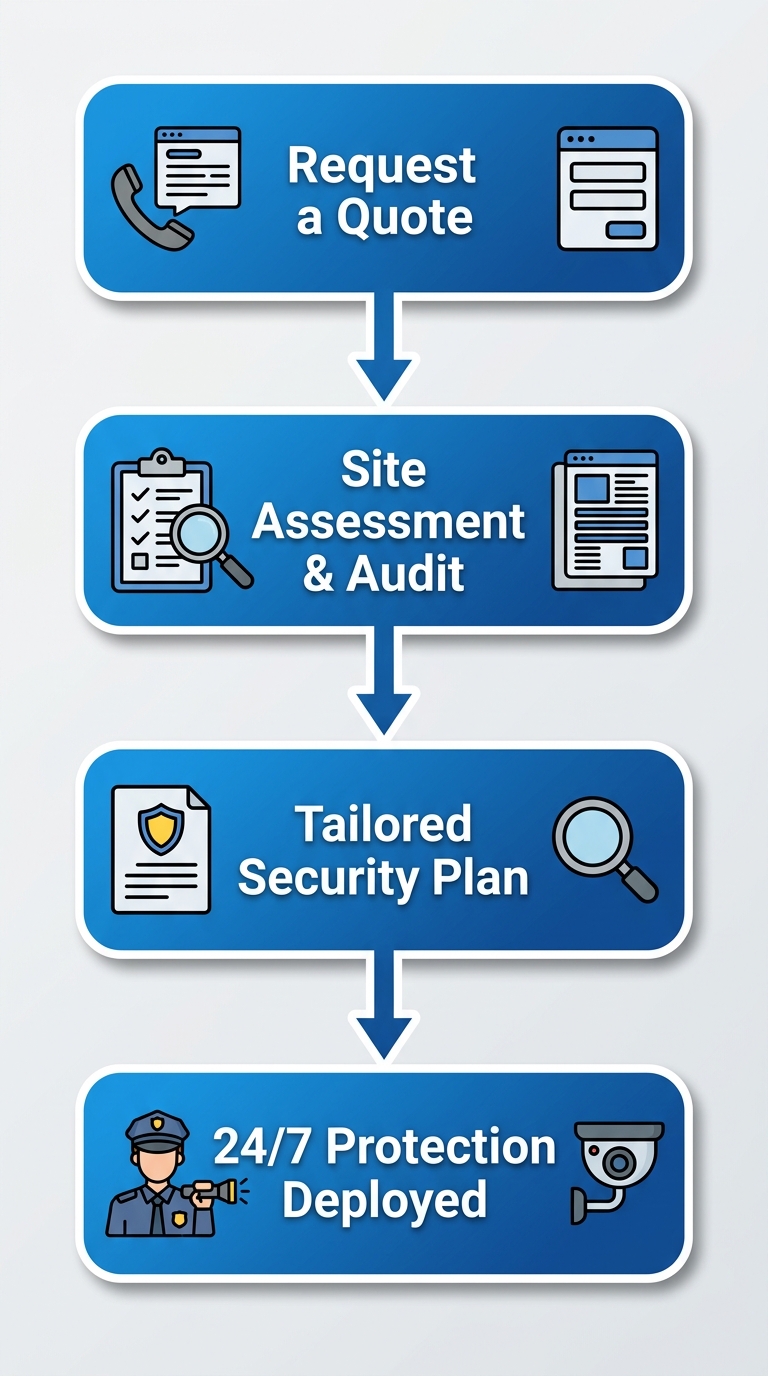
A thorough security audit for business operations forms the cornerstone of our risk management approach at Regent Security. Our comprehensive evaluation process helps property managers and business owners identify vulnerabilities before they become liabilities. We tailor every assessment to the specific needs of commercial and residential properties in Vancouver, Surrey, Burnaby and throughout the Lower Mainland. Our methodology follows three structured phases that ensure no critical detail is overlooked.
Initial Consultation and Scope Definition
Every effective audit begins with a detailed conversation about your unique security landscape. We meet directly with property managers and stakeholders to understand the assets requiring protection, operating hours and any existing security concerns. This collaborative session allows our team to map out coverage requirements and establish clear evaluation parameters.
Our consultants document all access points, high-value areas and operational workflows during this initial phase. We review previous incident reports, insurance requirements and any regulatory obligations that apply to your facility type. This groundwork ensures the subsequent on-site assessment addresses your actual risk profile rather than applying a generic checklist. A well-defined scope also allows us to provide accurate custom-quotes for any recommended upgrades later in the process.
On-Site Walkthrough and Assessment
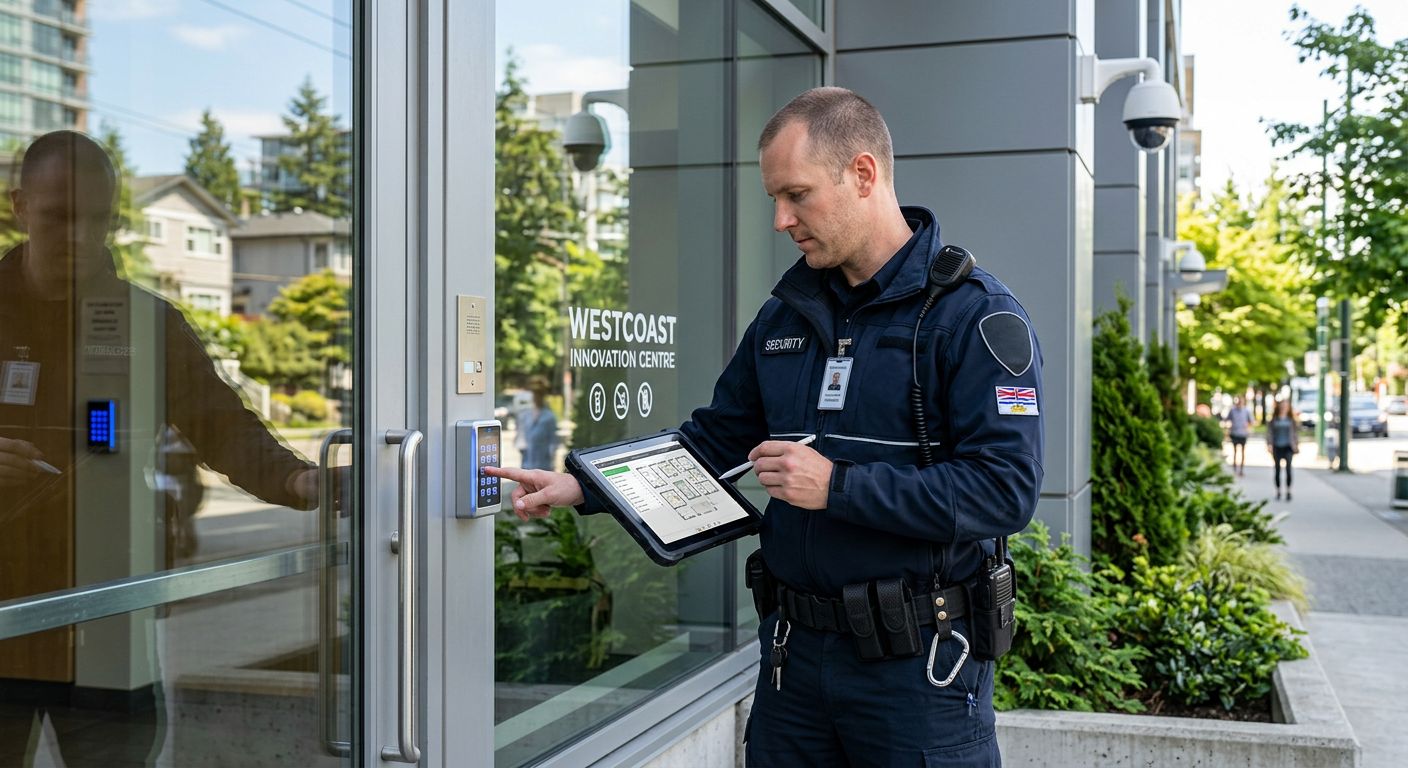
The physical inspection represents the most intensive phase of our commercial risk assessment checklist methodology. Our trained assessors conduct a systematic walkthrough covering perimeters, entry points, lighting conditions, locking mechanisms, CCTV coverage and alarm system functionality. We evaluate both the hardware components and the operational procedures that govern how security measures are used day to day.
Personnel deployment patterns receive equal attention during this phase. We observe guard positioning, patrol routes, access control protocols and response readiness to identify gaps in human-centred security layers. Our team members have completed training through the Justice Institute of British Columbia, ensuring every assessment aligns with recognized industry standards. This combination of physical inspection and procedural evaluation produces findings that are both thorough and actionable.
Reporting and Recommended Action Plan
Following the on-site assessment, we compile all observations into a clear, prioritized report designed for practical decision-making. Each finding is categorised by severity level so property managers can address the most critical vulnerabilities first. Our recommendations include specific, implementable actions rather than vague suggestions that leave clients uncertain about next steps.
The report also serves as a roadmap for phased improvements, accommodating budget considerations without compromising essential security measures. Where upgrades are recommended, we provide custom-quotes for equipment installation, system integration or additional personnel deployment. This physical security vulnerability assessment document becomes a living reference that property teams can use to track progress and demonstrate due diligence to insurers and stakeholders, and reflects assessments carried out by staff trained at the Justice Institute in British Columbia. Based on the audit findings, we deliver targeted upgrade proposals and pricing tailored to each property’s requirements — Your peace of mind remains our ultimate deliverable.
Best Practices for Ongoing Security Assessment
Once your audit is complete, the next step is to embed ongoing assessments into your security routine. For any business, an initial security audit for business is just the start—ongoing assessment is critical to staying ahead of evolving risks throughout the Lower Mainland.
Scheduling Regular Audit Intervals
We recommend property managers schedule repeat assessments based on the specific risk profile of their site. A low-risk office building with stable tenant rosters typically requires an annual review to verify that access controls and perimeter measures remain effective.
Higher-traffic environments demand more frequent checks. Retail spaces in Surrey with heavy footfall or hospitality venues benefit from semi-annual audits, while construction sites in Burnaby or properties with rapid tenant turnover should be reassessed quarterly. Aligning each review with a commercial risk assessment checklist tuned to your property type helps capture seasonal shifts—such as increased theft risk during holiday retail peaks or heightened site vulnerability during Vancouver’s winter storm season.
This rhythm turns security from a one-time project into a proactive discipline, ensuring gaps are spotted before they become incidents.
Updating Your Security Strategy After the Audit
Audit findings must feed directly into a living security plan that adapts as threats, personnel, and physical layouts change. Every follow-up should include a physical security vulnerability assessment to pinpoint fresh weaknesses—whether it is a blind spot created by new landscaping or an outdated lock schedule that no longer matches tenant hours.
In the Lower Mainland, seasonal factors play a significant role in security strategy. Construction sites in Vancouver face heightened exposure during winter storms when fencing can be compromised, while retail locations in Surrey need extra loss-prevention measures ahead of summer events. We recommend treating the security plan as a dynamic document that integrates audit results, incident reports, and local crime trend data, keeping your posture sharp year-round.
Partnering with a Local Licensed Security Provider
Working with a fully licensed, insured provider that understands the unique challenges of Vancouver, Surrey, Burnaby, and the broader Lower Mainland adds immediate value to your security program. Local knowledge means faster response, familiarity with municipal bylaws, and insight into neighborhood-specific risk patterns that a remote provider simply cannot match.
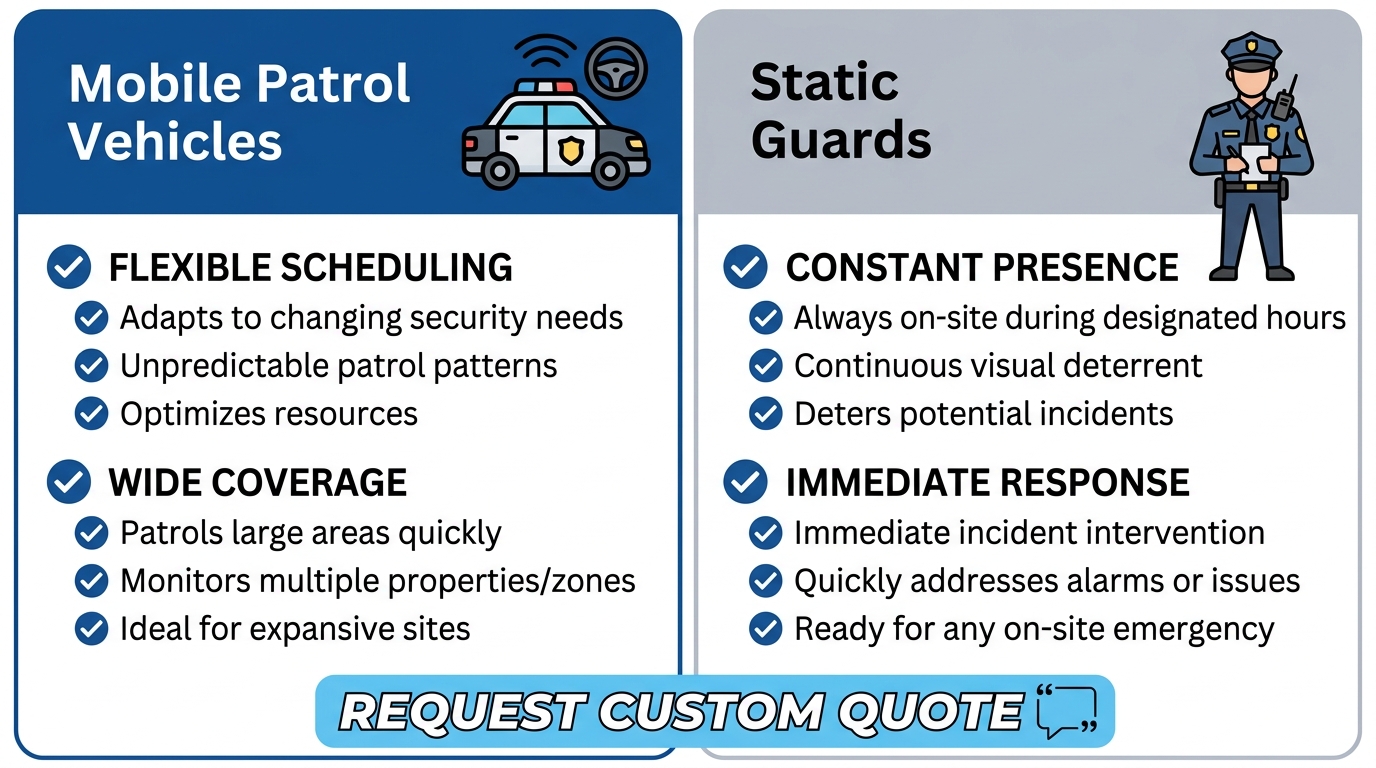
Regent Security, a locally trusted provider, notes on their website that they offer comprehensive security services in Vancouver, tailored to the unique needs of Lower Mainland properties. With more than 15 years of operational experience and a team of over 150 licensed professionals, they deliver technology-enabled guard services—from mobile patrols and CCTV monitoring to concierge security—backed by 24/7 coverage and rapid same-day deployment. Their track record across residential, commercial, and construction sectors demonstrates a commitment to consistent, high-caliber protection.
We invite you to speak with our team about a tailored security consultation that builds on your audit and keeps your protection cycle moving forward. Your peace of mind—where your safety is our story.
Taking the Next Step Toward a Safer Property
Now that you understand the value of a comprehensive security audit, scheduling a security audit for business is the logical next step. A free, no-obligation consultation puts our team of over 100 trained, licensed, and insured professionals at your service. We provide 24/7 availability and same-day deployment to address urgent vulnerabilities quickly, giving you confidence and Your peace of mind.
During your assessment, we conduct a physical security vulnerability assessment and follow a commercial risk assessment checklist to uncover hidden risks. Our evaluations align with guidelines from respected organizations like the United States Department of Energy to ensure a thorough review. The result is a customized security plan that may include mobile patrols, access control, or CCTV monitoring. Whether you need mobile patrols, access control, or CCTV, our customized plan provides a clear path to a safer property. Tailored pricing ensures you pay only for the protection you need.
To take the first step, call (866) 603-1303, fill out our online form, or visit our Security Services Vancouver page for a full overview of our tailored solutions. Unmatched security expertise is just a conversation away.
Resources