
How to Write a Security Guard Resume: Step-by-Step Guide for 2026
Table of Contents
- How to Write a Security Guard Resume in British Columbia
- Before You Begin: BC Credentials and Licence Details You Need Ready
- Step 1: Choose the Right Resume Format
- Step 2: List Your BC Security Licence and Certifications
- Step 3: Highlight Your Security Work Experience
- Step 4: Showcase Software and Concierge Duty Experience
How to Write a Security Guard Resume in British Columbia
If you’re wondering how to write a security guard resume for British Columbia, it’s important that you tailor it to meet BC’s licensing and training standards. BC employers and licensing bodies want to see that you have a BC security worker licence, industry-specific training and relevant experience to prove your eligibility to work in this field. how to write a security guard resume in British Columbia
Your resume needs to show your mandatory Basic Security Training (BST), and any additional credentials that you have earned. These will be listed as requirements for licensure. Display your licence status prominently and include details of your experience that align with BC’s regulated security categories (i.e. Guard services, mobile patrols). This way your application will meet the criteria set out by the province right from the start.
The first step is to get your BC credentials and licences together, so your resume reflects your qualifications correctly and you stand out to potential employers.
Key Takeaways
- Before learning how to write a security guard resume in British Columbia, get to know the licence details that employers will check on.
- Each security worker in British Columbia needs to have a valid licence issued by the provincial Security Programs Division; BC employers will not accept credentials from another province instead.
- After your licence and certifications have been added, employers will be looking at your practical experience.
- When you’ve written out all your essential security duties, highlight the software platforms that you’ve worked on and reframe your concierge experience in security terms.
- While technical duties and site-specific experience are important, employers who hire for security and concierge jobs also value general people skills applicable to most industries.
Before You Begin: BC Credentials and Licence Details You Need Ready
Before learning how to write a security guard resume in British Columbia, get to know the licence details that employers will check on. Every security worker in this province needs to have a valid BC security worker licence, even if they already hold another licence elsewhere in Canada. This licence is mandatory for you to be legally employed as a security guard.
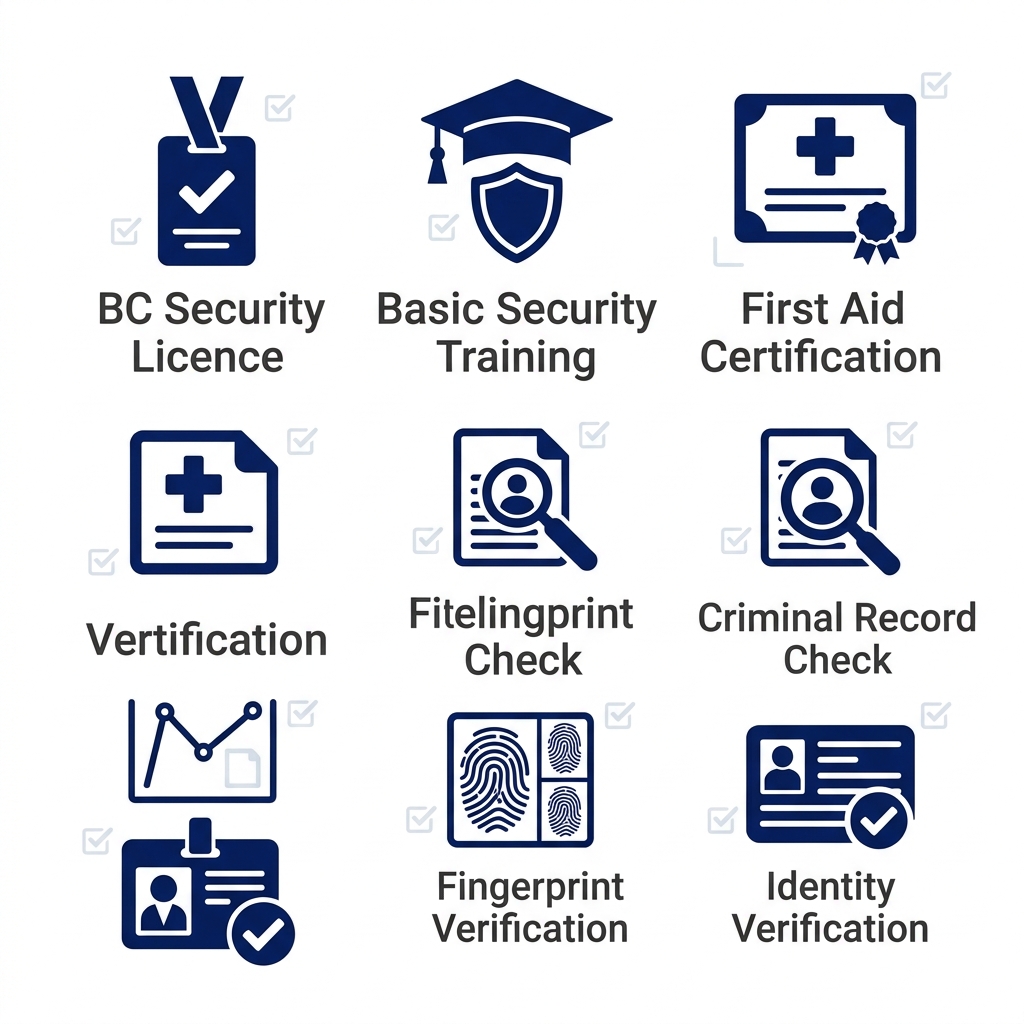
Make sure you’re eligible first: you need to be 19 or older, live in Canada and speak English fluently. Do any necessary training for your licence category and then gather up all required documentation. You will need to provide a criminal record check and be fingerprinted on your initial application as well as any renewal that has not been verified via a BC Services Card account. Use the online Security Services Platform with your BC Services Card to make your application easier.
Incomplete applications may lead to delays in processing, so clean up your paperwork prior to starting your job search. Employers frequently verify professional licences, so make sure the information on your resume is correct and honest.
Step 1: Choose the Right Resume Format
Once you’ve got your British Columbia security badge on your lanyard, the next task in learning how to write a security guard resume is to choose a clear and employer-friendly layout. There are three most common formats available: reverse-chronological, functional and combination styles. Reverse-chronological lays out your most recent work experience first, allowing the reader to skim easily through your employment history. Functional style lists your skills first rather than the dates, this works well for those with breaks in their career or who are trying to make a transition from another field. Combination style blends both to strike a balance between listing skills and timing.
For most BC security guard positions, we advise using the reverse-chronological format. Employers want to see your full work history, and this layout will show them your most current and relevant experiences first. It also places your licences and certificates at the top of your resume for easy verification, which is important because recruiters commonly check this information when making a decision on job candidates.
Now that you have selected your format, your next task is to structure the credentials section to make sure each license and certification is easily recognizable.
Step 2: List Your BC Security Licence and Certifications
Each security worker in British Columbia needs to have a valid licence issued by the provincial Security Programs Division; BC employers will not accept credentials from another province instead. Format each credential with your name, the issuing organization, and completion date, for example:
- Basic Security Training (BST) – Justice Institute of British Columbia – 2023-05-15
- Advanced Security Training (AST) – Justice Institute of British Columbia – 2024-02-20
- Occupational First Aid Level 2 (OFA 2) – Canadian Red Cross – 2022-11-10
List any pending certifications along with the expected date of achievement. Employers frequently verify credentials, so make sure they’re correct. You can verify your current licence status via the provincial government’s online registry that hiring managers will use to verify candidates. Refer to the keyword how to put a security guard license on a resume to guide your formatting.
Step 3: Highlight Your Security Work Experience
After your licence and certifications have been added, employers will be looking at your practical experience. Include the employer name, dates, and site type (hotel, strata building, construction site, etc.) for each security role in order to show what environment needs protecting.
For duties, try using the same language found in job postings, like "monitoring," "patrols," and "access control." If you can, quantify your impact as much as possible: mention how many posts you monitored, the number of shifts you managed, and reports that you filed. So instead of a vague phrase like "responsible for security," this turns it into clear, demonstrable proof of what you were able to do.
Don’t forget to include experience you gained while working under BC’s Security Services Act license, as the Government of British Columbia requires all security workers to have completed industry-specific training and hold a valid licence even if you already have out-of-province credentials.
Step 4: Showcase Software and Concierge Duty Experience
When you’ve written out all your essential security duties, highlight the software platforms that you’ve worked on and reframe your concierge experience in security terms. List out the particular tools that you have used such as Pro-Watch, Genetec Security Center or Brivo to show the kind of technical skills that employers are looking for in BC security guard positions.
Concierge roles can easily be rebranded into security by adding the proper wording: front desk access control, visitor screening, keys, and patrol log. Add that with your Basic Security Training (BST), and a background check (as BC licensing requires both). Employers will be looking for these things before they hire you, so include them on your resume to prove yourself as qualified and ready to work.
This step will make sure that your resume reflects the technical as well as professional standards expected of a security professional.
Step 5: Highlight Transferable Customer Service Skills
While technical duties and site-specific experience are important, employers who hire for security and concierge jobs also value general people skills applicable to most industries. These include being able to greet guests in a professional manner, calmly addressing any concerns that arise, and remaining approachable when under pressure. All of these can be utilized in front-desk and security roles.
Pull over applicable experience from other jobs, be it in a hotel, retail, or guard role, and then describe these experiences as achievements, rather than a list of what you did. Instead of describing what you did, explain the outcomes: “Resolved guest complaints with a 95% satisfaction follow up rate at high-volume hotel front desk,” or “Monitored building entries while remaining welcoming, reducing unauthorized access by 30%.”
Align each phrase exactly as written on the job posting to help your resume pass applicant tracking systems. This makes sure that your experience reads as customized, not generic, which helps hiring managers see that you are a fit for the role.
Step 6: Tailor Your Resume to Each Role
Once your transferable skills have been identified on the resume, the next step is tailoring your resume to each application. A generic resume is usually not enough to get you the desired result; therefore, adapt the resume to match what each job application is looking for.
Include the credential name, issuing organization, and completion date in your resume when you list licenses and certifications. Separate licenses from voluntary certifications: licenses are those mandated by the government and required to be working, while certifications show professional expertise that is not. Both should be described properly to fit the wording of the job post, as these credentials serve as important keywords to draw employers’ attention and increase the chances for receiving higher salary offer.
If you have a pending certification, put this with the date when you expect to receive the certification. For expired certificates, be honest about your situation. These claims are frequently verified, so make sure they are true. And make sure your credentials appear the same everywhere on your resume and LinkedIn profile to stay consistent and credible.
Step 7: Proofread, Verify, and Finalize Your Resume
Before you hit the submit button, review your resume once more to make sure all your hard work was successful. A good looking resume shows professionalism and attention to detail, which employers love. The resume experts tell us that employers often check to see if resumes match up with actual degrees, certifications, or job experience. So you must be accurate here.
We recommend three focused passes through: once for spelling and grammar, then once for consistent formatting (dates, spaces, bullets), and one final pass where you read aloud to catch awkward phrasing. Go back and double check all of the licenses and certifications entries to make sure names, issuing bodies, and dates are correct, and put any credentials that you are still working on with expected completion date instead of saying that you’ve already finished them. Make sure that your contact information, references, and employment dates are up to date before saving the final draft, giving it a professional filename, and submitting it.
Your document is now clean and verified, and it stands out for the right reasons.
Fixing Common Resume Problems Before You Apply
We’re security hiring managers and we see the same issues on resumes time after time. The vast majority have to do with unclear or missing credentials that get vetted out before an interview occurs.
Start by checking these four areas:
- Licence accuracy: Confirm your BC security licence is current and listed with the exact name and expiry date. Employers cross-check licences against the BC government’s online registry, so any mismatch raises red flags. In British Columbia, a valid security worker licence is legally required regardless of credentials earned in other provinces.
- Training and certifications: Include your 40-hour Basic Security Training completion and Occupational First Aid Level 1 certification with the issuing organization and date. These are mandatory for BC security roles and must appear prominently.
- Consistency and placement: Ensure dates, job titles, and credential names match across your resume and LinkedIn. Place credentials in a dedicated section or early in your summary so reviewers spot them immediately. Employers verify every claim, so accuracy and consistency are essential.
- Honesty in claims: Never list expired or pending licences as active, and avoid vague phrases like “security experience.” Every claim should be verifiable through your licence number or training certificate. Maintain transparency and accuracy throughout the application process to avoid red flags.
Frequently Asked Questions
What specific certifications should I include on a security guard resume to stand out in British Columbia?
Include your BC security worker licence, Basic Security Training (BST), Advanced Security Training (AST) if applicable, and Occupational First Aid Level 2 (OFA 2). List the issuing organization and completion date for each to show compliance with BC’s Security Services Act requirements.
How can I effectively highlight my experience with incident reporting software and concierge duties on my resume?
List the specific software platforms you have used, such as Pro-Watch or Genetec Security Center, under a technical skills section. For concierge duties, reframe them using security terms like access control, visitor screening, and patrol logs to align with security job expectations.
Should I list my BC security worker licence and expiry date at the top of my resume?
Yes, place your BC security worker licence, including the expiry date, near the top of your resume. Employers verify licences through the provincial registry, so clear visibility ensures compliance and trust.
What are the best ways to showcase transferable customer service skills for a hotel security guard role?
Highlight skills such as greeting guests professionally, addressing concerns calmly, and remaining approachable under pressure. Use outcomes like reducing unauthorized access or improving guest satisfaction to demonstrate the impact of these skills.
How should I structure my work history if I have experience in both construction site security and commercial property monitoring?
Use a reverse-chronological format, listing your most recent roles first. Include the employer name, dates, and site type for each role. Focus on duties like monitoring, patrols, and access control, using language from job postings to tailor your experience.
Take the Next Step in Your Security Career
Now that you have learned how to write a security guard resume, your completed resume is prepared to make a good first impression on your prospective employer. The following crucial step is acquiring a BC Security Worker Licence because it is required to work as a security guard in BC – even if you already have a license from another province.
Apply online through Security Programs Division using your BC Services Card for identity verification. Complete required fingerprinting and 40 hour Basic Security Training course, then submit your application to avoid any delay. After you have been licensed, we invite qualified candidates to apply their resume to positions within our team in Vancouver and Lower Mainland.
Results and pricing may vary depending on site-specific requirements and assessments.
Put Your Resume to Work
You now have a complete roadmap for writing a security guard resume in British Columbia, from gathering your licence details to tailoring each application and verifying every credential. With your BC security worker licence confirmed and your 40-hour Basic Security Training documented, your application is ready to stand out. Employers in Vancouver and across the Lower Mainland look for exactly the accurate, verifiable details this guide helped you present. The next step is simply putting that polished resume in front of the right team. Our licensed professionals at Regent Security Services Ltd. work throughout Vancouver and the Lower Mainland, and qualified candidates are welcome to reach out. Remember to confirm current licensing requirements with official BC government sources, since requirements may change. Take that first step and connect with a team that values properly prepared applicants.

